
Where to Eat in Paris: 14 Spots With Real Prices
The bouillons, the Marais falafel and the crepes by the Île de la Cité, with area, real price, what to order and whether you need to book. September 2026 data.
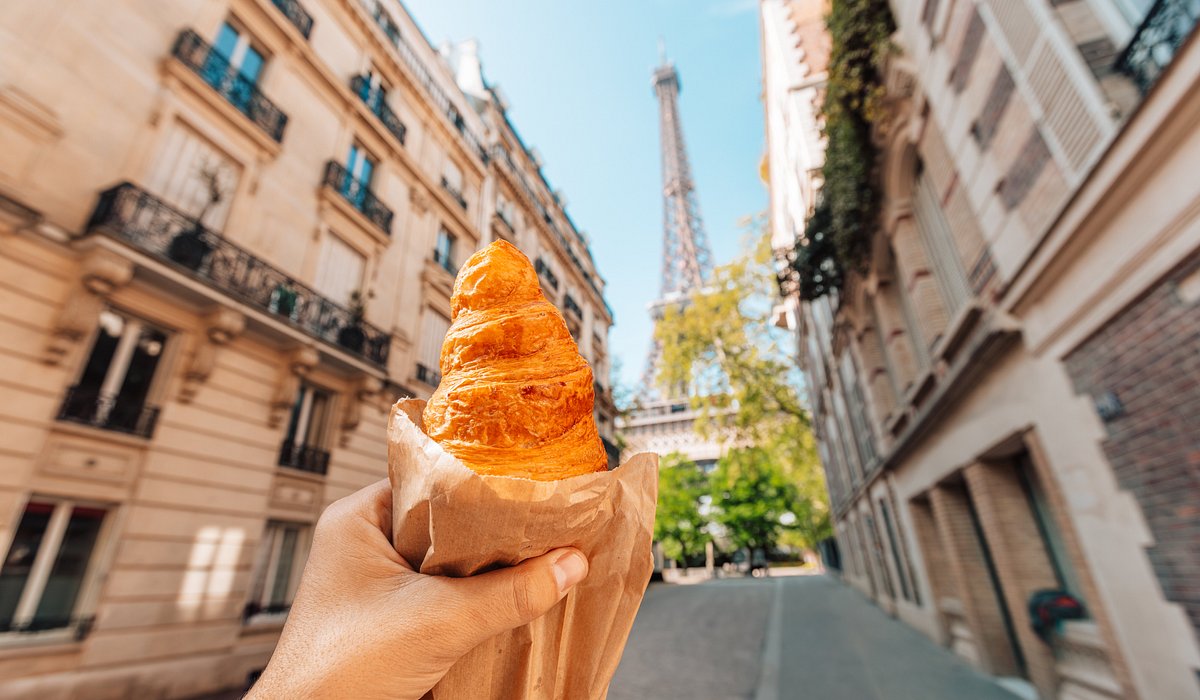
Paris has a reputation for expensive food that is simply wrong. The proof is that millions of locals eat well every day in bouillons, bakeries, covered markets and neighbourhood creperies. What actually costs money in Paris is not eating, it is eating in the wrong place. If you want the full city plan, our Paris travel guide covers the sights. This one is about food: where to go by area, what each plate really costs, what to order and when you need to book. Prices checked on 26 September 2026.
Eating in Paris at a glance
- Realistic daily budget: 20-45 euros if you eat like a local. A bistro dinner pushes it to 60-90.
- The cheap way in: the bouillons. Starter, main and dessert for under 20 euros, no menu in six languages, no fuss. The trade-off is a 30-90 minute queue, and in return you get proper French cooking.
- The weekday trick: the lunch formule, a fixed starter, main and dessert. It is the same food that costs double in the evening.
- No booking needed: every bouillon, the Enfants Rouges market, takeaway falafel and the bakeries. You pay for the queue, not the reservation.
- Book ahead: galettes at Breizh Cafe, any neo-bistro (one to seven days out) and anything with a Michelin star.
- About service: it is included, and there is no expected tip. Tap water is free if you ask for “une carafe d’eau”.
The decision table: where to eat by budget and time of day
This is the table worth printing. Pick a row rather than picking a famous name.
| Place | Area | Price | Order this | Booking | Kind of meal |
|---|---|---|---|---|---|
| Bouillon Chartier | Grands Boulevards, 9th | Starters 1-7.50, mains 7-13.80, desserts 2-4.90 euros | Vegetable soup, steak frites, bœuf bourguignon | No. 30-90 min queue | Historic French bistro in a hall open since 1896 |
| Bouillon Pigalle | Pigalle, 18th | Mains 9-14 euros, full dinner with wine around 25 | Œuf mayo, bœuf bourguignon, profiteroles | No. Long queue at peak | The most requested modern bouillon |
| Bouillon République | Le Marais, 3rd | Same menu and prices as Pigalle | The same classics, minus the queue | No | The smarter second visit once you have done Pigalle |
| Bouillon Julien | Châtelet, 10th | 30-35 euros per person | The daily special under a 1906 Art Nouveau ceiling | Strongly advised | The most beautiful dining room in the city |
| L’As du Fallafel | Le Marais, 4th | 8.50 euros for the special falafel to go | Mixed falafel with hummus and pickles | No | Jewish street food at its most famous |
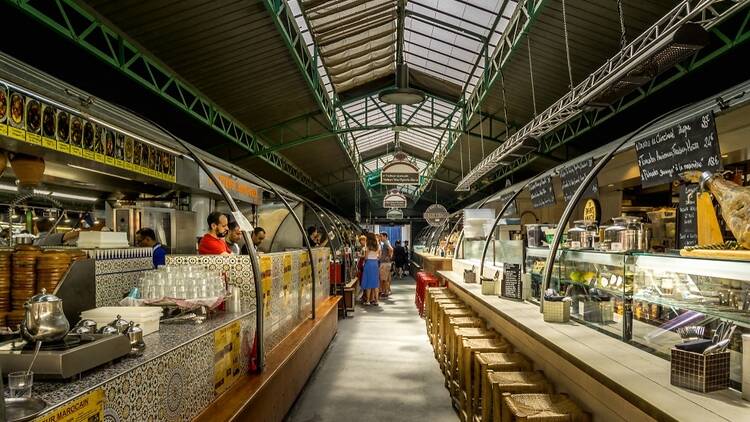
| Les Enfants Rouges | Le Marais, 3rd | 5-15 euros per dish | Crepes, oysters, buns, sushi | No | Eating standing up between market stalls |
| Breizh Cafe | Le Marais, 3rd | Galettes 9-14 euros, cider 4-5 | Galette complete and a brut cider | Yes, one to three days ahead | The capital’s most popular galette |
| La Crème de Paris | Île de la Cité, 4th | Sweet 6-9 euros, savoury 5-7 | The ham and cheese galette | No | The easiest creperie by the Île de la Cité |
| Du Pain et Des Idées | Canal Saint-Martin, 10th | 2-5 euros per pastry | The 2 euro croissant and the pain des amis | No | The benchmark bakery, queue from 8am |
| Florence Kahn | Le Marais, 4th | 3-6 euros | Pain au chocolat and savoury tarts | No | American-style bakery without the queue |
| La Table des Gourmets | Les Halles, 4th | Average 33 euros, mains 14-18 | The lunch formule | Yes, strongly advised | Traditional and reliable bistro |
| Le Mesturet | Le Marais, 4th | Formule 30-36 euros | Starter, main and dessert | Yes, or turn up at 1pm | Correct French food at a sane price |
| Café de la Paix | Opéra, 9th | Weekly menu 39-49 euros, mains 32-60 | The weekly menu | Yes, well ahead | Dinner here is a show, not a meal |
| Pantagruel | Le Marais, 4th | Average 130 euros, lunch 65 | The seasonal tasting menu | Yes, up to four weeks ahead | Michelin star for a special occasion |
Bouillon menus shift with the day’s produce, so confirm the price on the card when you sit down.
What a day of eating in Paris really costs
The most expensive mistake is comparing Paris with its restaurant menus instead of with its neighbourhood bar culture. Three honest budgets, calculated from the table above.
Budget: 20-25 euros a day
- Breakfast at a boulangerie: croissant at 1.20-2 and coffee at 2-3. About 4 euros.
- Lunch at a bouillon: bœuf bourguignon at 12.50 or chicken frites. About 15-20 euros.
- Dinner at a local bar: croque-monsieur at 8-9 or a pizza for 10-12. About 10-14 euros.
This is a real plan, not survival. The difference is that at this level you are eating proper French food rather than tourist terrace food, where the same plates cost 30.
Mid-range: 35-45 euros a day
- Add a coffee on the Place des Vosges or an aperitif: 4-7 euros.
- Move dinner up to a neighbourhood bistro: mains 18-24, dessert 8-10.
- One galette with cider: 14-19 euros.
High end: 70-150 euros a day
- The lunch formule at a named bistro: 30-49 euros with starter, main and dessert.
- A brunch with champagne: 35-50 euros.
- One star meal for the week: from 70 at a lunch menu to 170 at Le Cinq.
The rule I keep to after a few days: one special meal, two neighbourhood meals and everything else without ceremony. Spending 150 euros on breakfast wrecks a trip faster than any tourist trap.
1. Le Marais: the best-value area for a visitor
If you are only eating in one place across the whole city, make it here. Within a few streets you move from the overpriced terraces of the centre to neighbourhood prices. This is where market produce and ordinary local cooking meet.
L’As du Fallafel: 8.50 euros to go
The special falafel to go costs 8.50 euros. It is on the Rue des Rosiers, in the middle of the Jewish quarter. Service is quick and the room is plain, so expect to eat standing or at the counter. Mind the calendar: it opens Sunday to Thursday, 11:00 to 23:30, and it closes Fridays and Saturdays. If your last day falls on shabbat, the fallback is Chez Hanna, twenty metres away, with no-frills home cooking.
Les Enfants Rouges: eating standing up between stalls
It is not a restaurant but a covered market, the oldest in Paris, with dozens of small stalls. You pay per dish, 5 to 15 euros, and sit wherever there is space. There is sushi, buns, oysters, cheese and crepes. The best way to do it is lunch across three or four stalls in a row, with a glass of wine in between.
The other advantage of the Marais is that everything is within a five minute walk. The Rue des Archives and the Rue de Bretagne are full of creperies and neighbourhood bistros at half the price of the Opéra. You change cuisine five times in an hour without really moving.
Breizh Cafe: a proper Breton galette
A galette is not a crepe. It is a buckwheat batter with no egg and no milk, filled with cured meat, cheese and capers. They run 9-14 euros, with house cider at 4-5. Here the batter is real and so is the cider. This one does need a booking, one to three days ahead.
2. Grands Boulevards: a historic dinner at 1896 prices
The Bouillon Chartier is the clearest proof that the idea of expensive Paris only holds if you pick the wrong restaurant. Founded in 1896 and listed as a historic monument, it seats a thousand people at long tables, the waiters wear aprons, and the bill is written by hand on the paper tablecloth.
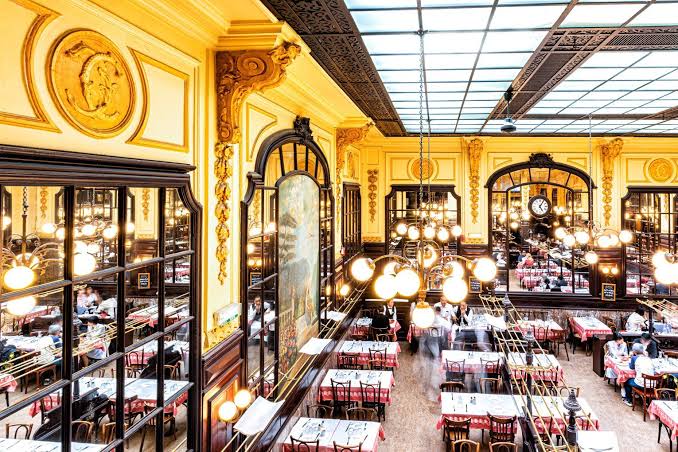
The current card lists starters from 1 to 7.50 euros, mains from 7 to 13.80 and desserts from 2 to 4.90. The 1 euro vegetable soup sums up the place. Order the bœuf bourguignon with coquillettes, the pièce du boucher with pepper sauce or prawns with mayonnaise. A full dinner with wine lands around 15 euros. It opens every day from midday to midnight and takes no bookings: you queue, 30 to 90 minutes at peak.
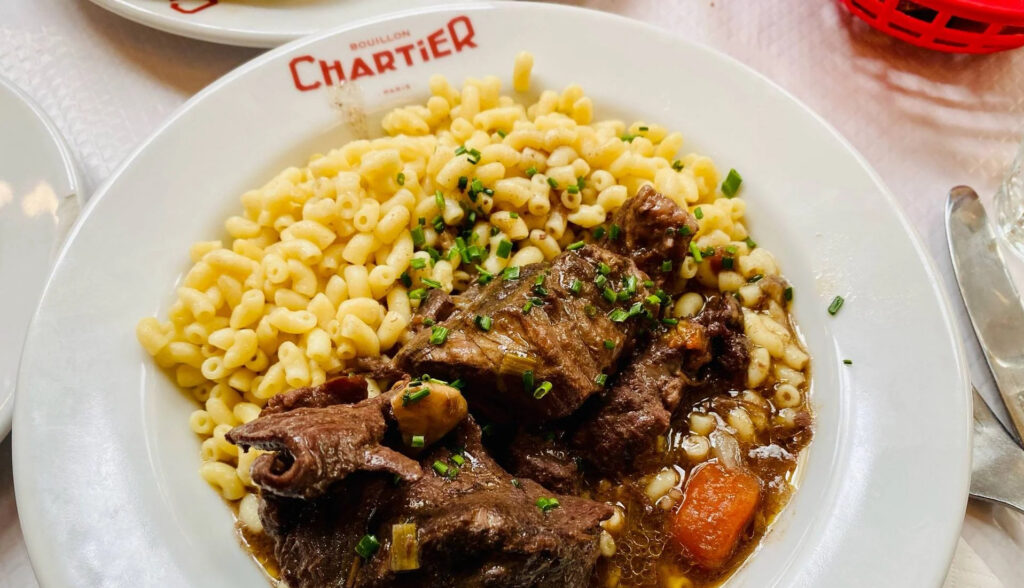
What works: go before noon or after 20:30. The queue at 19:30 on a Saturday can be long. And eat the way France does: one starter to share, a main, a dessert. No need to order the whole card.
Pigalle and its alternative: Bouillon République
Bouillon Pigalle, at 22 Boulevard de Clichy, is the most requested modern bouillon: around 2,300 customers a day, 300 seats and a queue that spills along the pavement. Mains run 9-14 euros and a full dinner with wine about 25. The plate that never misses is the œuf mayo.
The smarter move is Bouillon République at 39 Boulevard du Temple: same group, near-identical card, same prices and half the queue, because nobody lines up for the photo. Once you have done Pigalle, this is the second round that works just as well.
3. The sweet chapter: crepes, waffles and bakeries
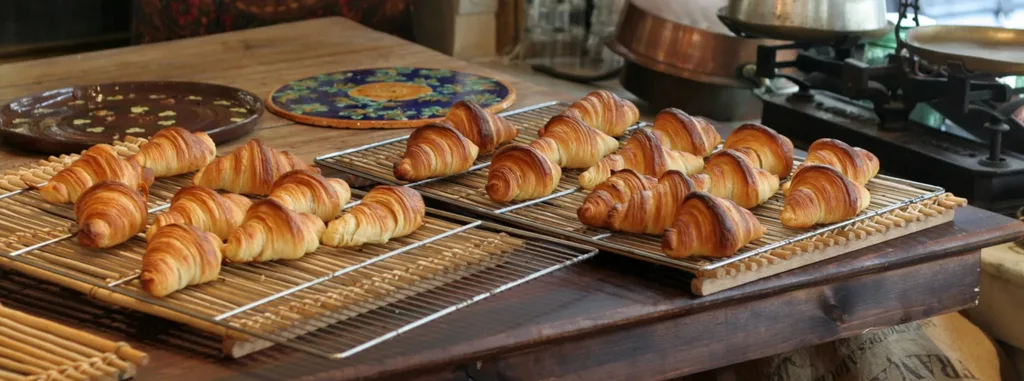
Paris is also judged on dessert, and two bakeries account for much of the city’s reputation. Du Pain et Des Idées is the benchmark: the croissant is 2 euros and the pain des amis, the sweet bun that crumbles as you eat it, 3. The queue starts at 8am, so go early.
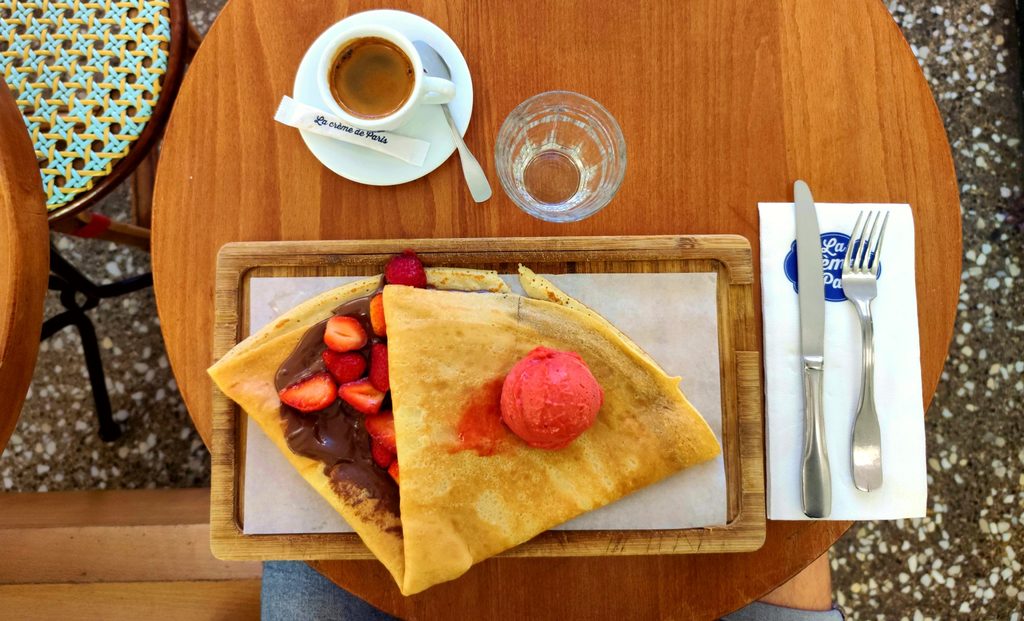
La Crème de Paris, by the Île de la Cité, is the easiest creperie for a visitor: 6-9 euros savoury and 5-7 sweet, no booking and nothing complicated. Order the ham and cheese galette.
Florence Kahn is the neighbourhood alternative when Du Pain et des Idées is full: the same standard without the queue. It opens Wednesday to Sunday, 10:00 to 19:00, and closes Mondays and Tuesdays.
Mistakes that cost real money
- Eating on a terrace overlooking the Louvre. The view is the point and the food is frozen, at double the price. The same plate two streets in costs half.
- Ordering bottled water without asking. Tap water is free in France. Ask for “une carafe d’eau”.
- Dinner at 20:00 near the Opéra with no booking. Those bistros fill up. Book, or eat at 18:00 or 21:30.
- Ignoring the lunch formule. Same food as the evening at half the price. In many bistros it is the best meal of the day.
- Expecting to leave a tip. Service is included on the card. Nothing needs adding.
- Arriving at Chartier at 13:00 on a Sunday. The Sunday midday queue is the real test of a trip. Go before noon or after 20:30.
The final pattern is simple: breakfast at a bakery, lunch at a market or bouillon, dinner in the neighbourhood and one special meal. That is how you eat in Paris without spending like you are on a business trip.
Eating in Paris with Trively
Settle the neighbourhood before you go out to eat. The Paris travel guide has the axes by arrondissement, the order that makes sense for the monuments, and the metro lines to get around, which is the detail that decides whether lunch lands in the right neighbourhood or on a tourist terrace.
With the table above and the plan by area you can build the food map of your own trip: pick the right neighbourhood, order the plates that work and pay the real price rather than the terrace one. Prices checked on 26 September 2026. After writing this guide, the plan is to repeat it: two neighbourhood meals and one special one a day.