
Where to Eat in Rome: 16 Spots With Real Prices
Cacio e pepe, carbonara, pizza al taglio and the coperto nobody explains: 16 Rome addresses with area, 2026 prices, opening hours and booking rules.
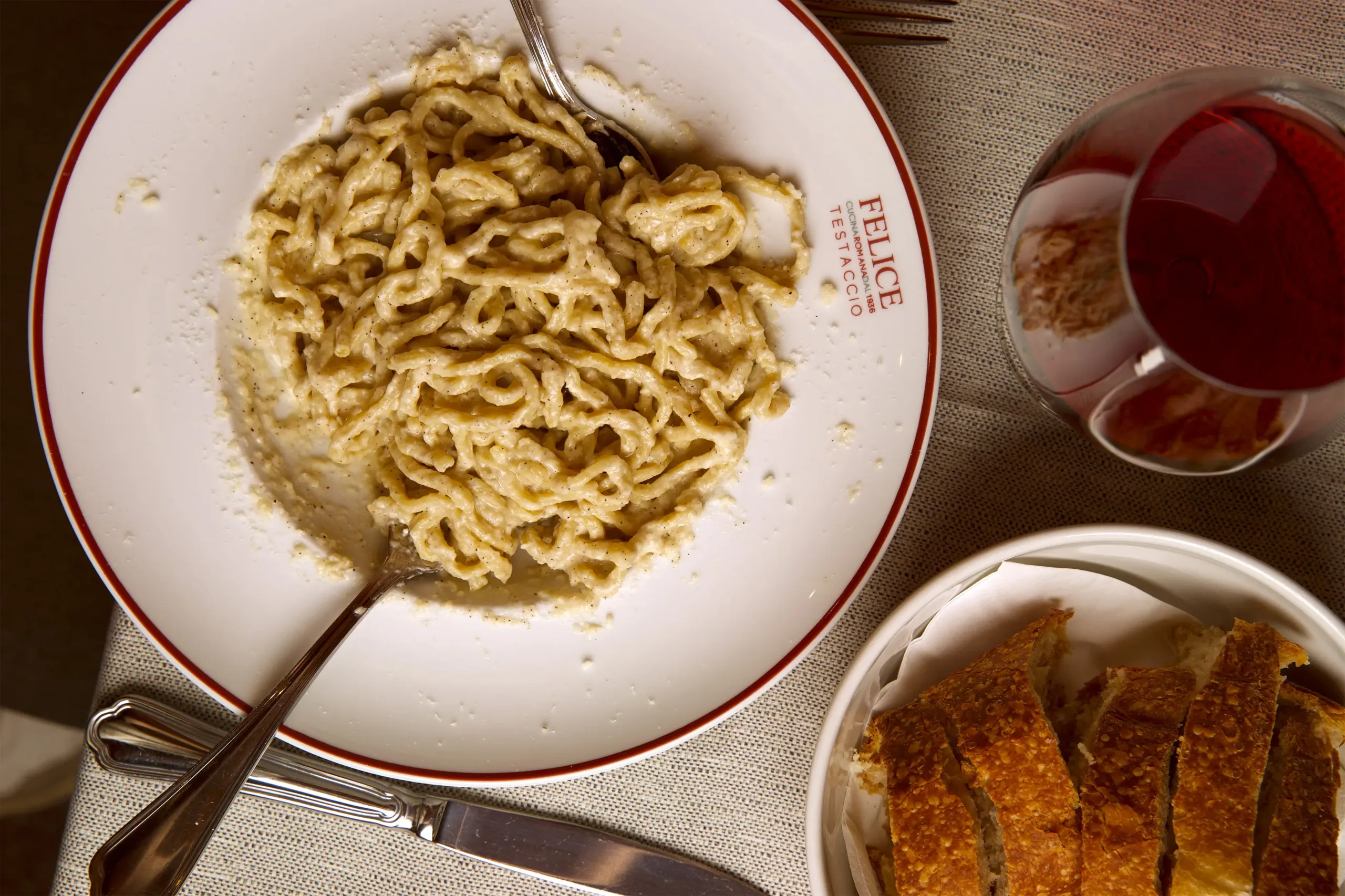
What eating in Rome costs in 2026, before you look at a single list
In 2026 a carbonara in the centre costs between 12 and 14 euros, and a two-course meal without drinks works out at around 27 euros a head. A three-course menu runs 30 to 45 euros. On top of that comes the item that surprises almost everyone the first time: the coperto, 1 to 3 euros per person, which appears on the bill as pane e coperto or as servizio. It is not a strange extra, it is the norm.
The second rule is pizza. Pizza al taglio is sold by weight, so the assistant weighs your plate and you pay for what you take: roughly 2.50 to 4 euros a portion. Tonda pizza, the thin wood-fired one, is a different thing with its own timetable: the classic pizzerias open around 18:30 or 19:00 and a whole pizza costs 8 to 12 euros. Turn up at two in the afternoon and there is no tonda to be had.
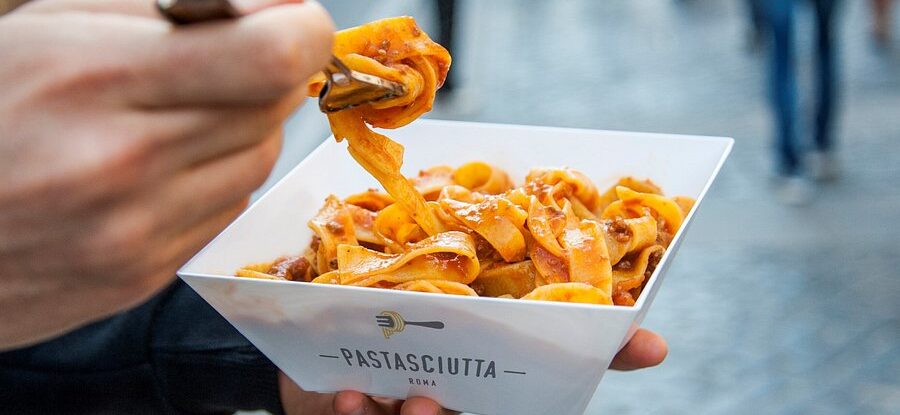
With those numbers in mind, a neighbourhood lunch sits between 15 and 25 euros and a three-course dinner between 30 and 45. And below all of that sits the option that surprises visitors most: the Mercato di Testaccio, open Monday to Saturday from 7:00 to 15:30, where you eat at market prices with the produce in front of you.
What follows is a table of 16 Rome addresses with 2026 prices, the area, the dish worth ordering and the detail that actually decides whether you can get in: whether they take bookings, how late they stay open and how you pay. So you are not walking across the city blind.
The table: 16 addresses with price, area and how to get in
Ordered by area, from the most visited to the most local. Prices are 2026 figures and they refer to dishes rather than to the full bill: remember the coperto at the end.
| Place | Area and address | 2026 price | Order this | Before you go |
|---|---|---|---|---|
| Osteria da Fortunata | Campo de’ Fiori, via del Pellegrino 11 | 17 euros a pasta dish | Cacio e pepe, amatriciana or coda alla vaccinara | Every day 11:30 to 00:30. Coperto of 1 euro. Bookings for large groups only |
| Roscioli | Campo de’ Fiori, via dei Giubbonari 21/22 | 18 to 22 euros a pasta dish | Carbonara and maritozzo | Book a month ahead and it is still hard. Service at midday 12:30 to 16:00 and in the evening |
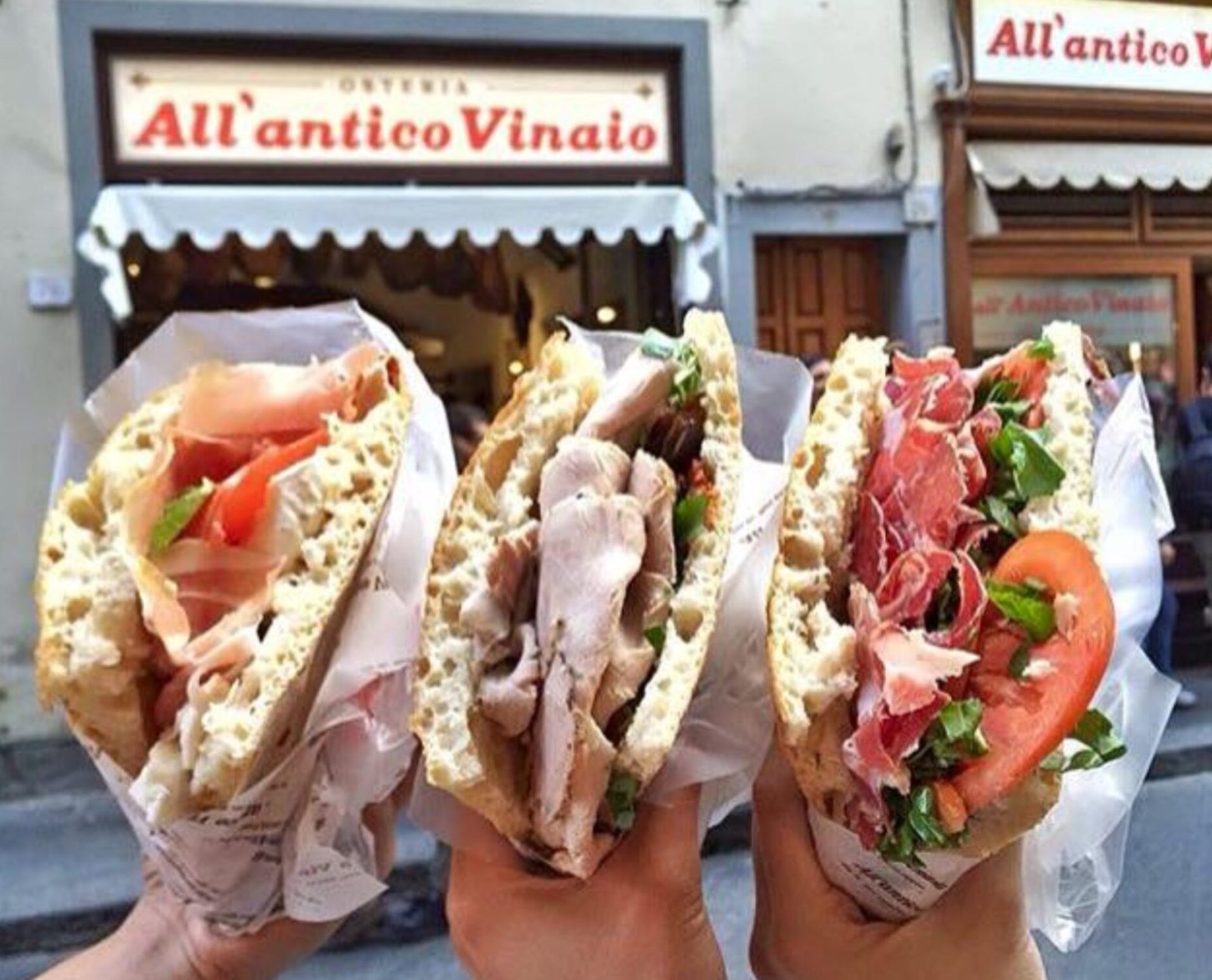
| All’Antico Vinaio | Centro storico, near Piazza Navona | A portion of schiacciata | Schiacciata with mortadella, the Florentine recipe | Standing, takeaway. It fills up in mid-afternoon |
| Alice Pizza | Vatican area | 2.50 to 4 euros a portion | Pizza al taglio, cut by weight | No booking and no tables: it is a counter where you buy by weight |
| La Carbonara | Monti, via Panisperna | Neighbourhood card, no set price | The carbonara, in a house open since 1906 | Walls covered in graffiti, local room rather than museum |
| Trattoria Monti | Monti, near via Panisperna | House card, no set price | Pasta from the Marche region | Family run since the seventies. Regional cooking, nothing international |
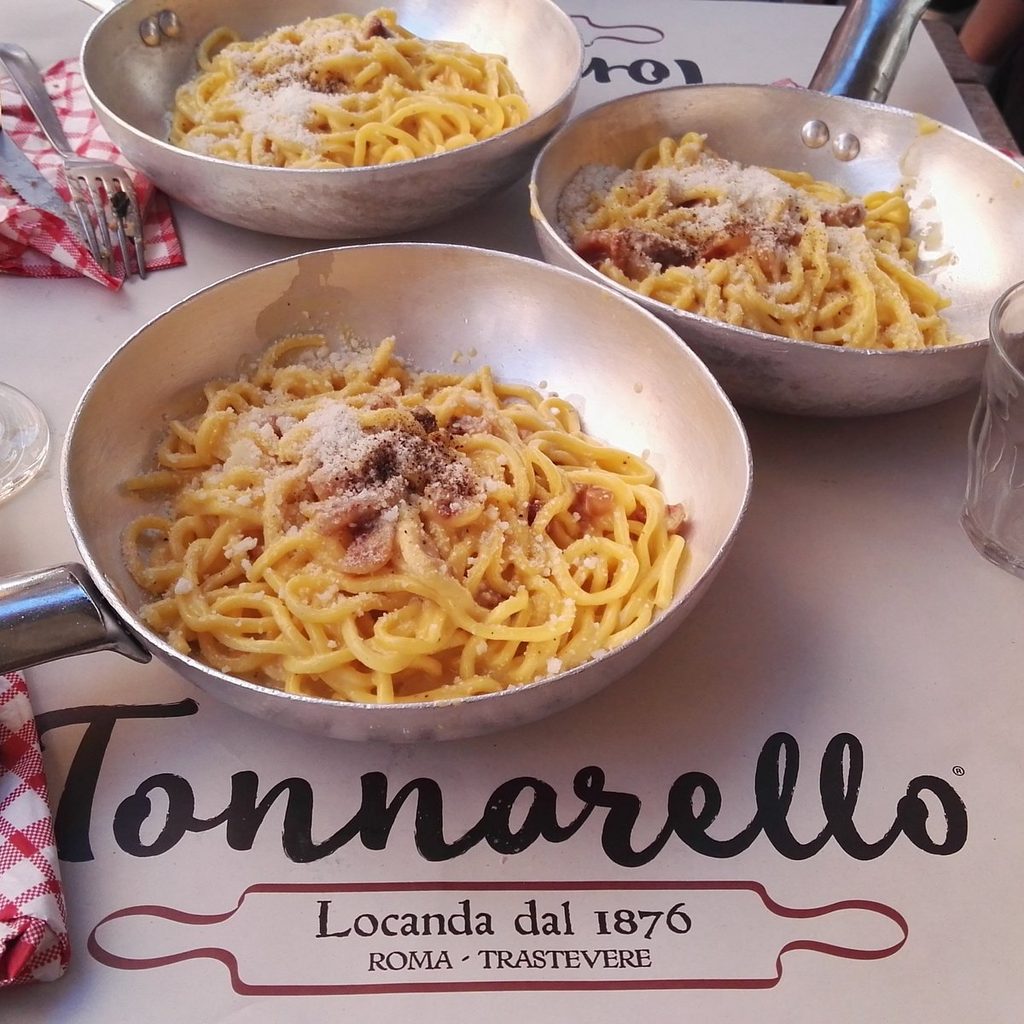
| Tonnarello | Prati, via della Paglia 1/2/3 | 11 to 12.50 euros a pasta dish | Cacio e pepe at 11 and carbonara at 12.50 | Every day 11:30 to 23:30, and until midnight on Friday and Saturday |
| Da Teo | Trastevere, piazza dei Ponziani 7 | 9 to 16 euros a main course | Carbonara and the seasonal wild asparagus fettuccine | Monday to Saturday, 13:00 to 15:00 and 19:30 to 23:30. Bus 125. Book by phone |
| Da Enzo al 29 | Trastevere, via dei Vascellari 29 | 14 euros the rigatoni | Cacio e pepe and the fried artichokes | Twenty tables and no dinner bookings: arrive before 18:15 or come at lunch |
| Roma Sparita | Trastevere, piazza di Santa Cecilia 24 | 16 euros the cacio e pepe | Tagliolini inside a basket of baked parmesan | Tuesday to Saturday, 12:30 to 14:30 and 19:30 to 23:00. Closed Sunday and Monday |
| Spirito DiVino | Trastevere | Full card, no set price | Very old Roman recipes, cooked slowly | Tavern of a Sicilian family, member of Slow Food |
| Zia | Trastevere | Tasting menu, price on request | Antonio Ziantoni’s measured cooking | One Michelin star and booking required. Few tables |
| Glass Hostaria | Trastevere, a quiet side street | Fine dining, price on request | Cristina Bowerman’s creative work | One Michelin star, in a lane behind Santa Maria |
| Felice a Testaccio | Testaccio, via Mastro Giorgio 29 | 15 euros the cacio e pepe | Cacio e pepe finished at your table, in front of you | Every day 12:30 to 15:00 and 19:00 to 23:30. Book two weeks ahead |
| Trattoria Perilli | Testaccio | Classic card, no set price | The cacio e pepe served here like a liturgy | Open since 1911, in the market neighbourhood |
| Supplì Roma | Trastevere, near piazza Santa Maria | A few euros each | Daily suppli, coda alla vaccinara and fried carbonara | Small and very busy. You eat standing, there are no tables |
The Michelin-starred addresses in the table, Zia and Glass Hostaria, do not compare on price with the rest: they sit in another category, with tasting menus and mandatory bookings. They are here because you need to know they exist, not because they are the everyday option.
Centro storico and the Vatican: the fresh pasta you should not skip
In Campo de’ Fiori you will find the place that best sums up what people come to Rome for. Osteria da Fortunata has been there since 1921, and the pasta is made by an 88-year-old woman, nonna Iris, who is still at the stove. The egg pastas are 17 euros: cacio e pepe, gricia and amatriciana. The Roman artichokes are seasonal and cost 8 euros. It opens every day from 11:30 to 00:30, which makes it one of the few houses where you can arrive late and still eat.
One detail that saves more money than it looks: they do not split the bill between diners, everyone pays for their own plate. Worth knowing before you order if you are a group. The phone number is +39 06 6066 7391.
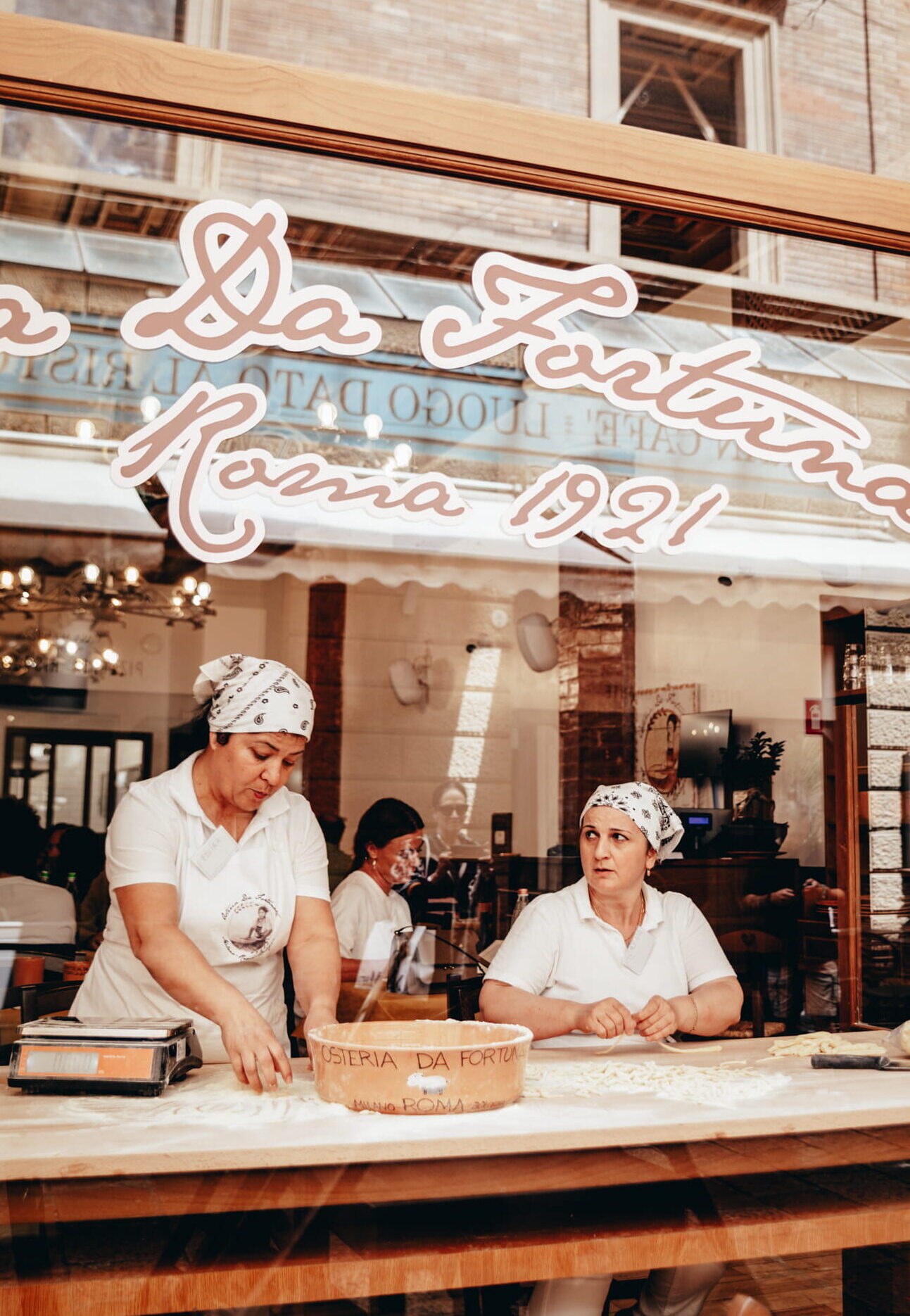
Just along the street on via dei Giubbonari, Roscioli is the other reference in the centre, with pasta between 18 and 22 euros and the best maritozzo in the city. The problem is never the food, it is the booking, which has to be requested a month ahead and still almost never comes through. If you land one, service runs 12:30 to 16:00 and then dinner in the evening.
Pizza al taglio, the fast food around the Vatican
Half an hour from St Peter’s Square the pizza is cut by weight and eaten standing up. Alice Pizza is the textbook example: 2.50 to 4 euros a portion depending on what you put on the plate. It is the cheapest meal in the centre and the only one you can sort out in ten minutes without going back into the museum queue.
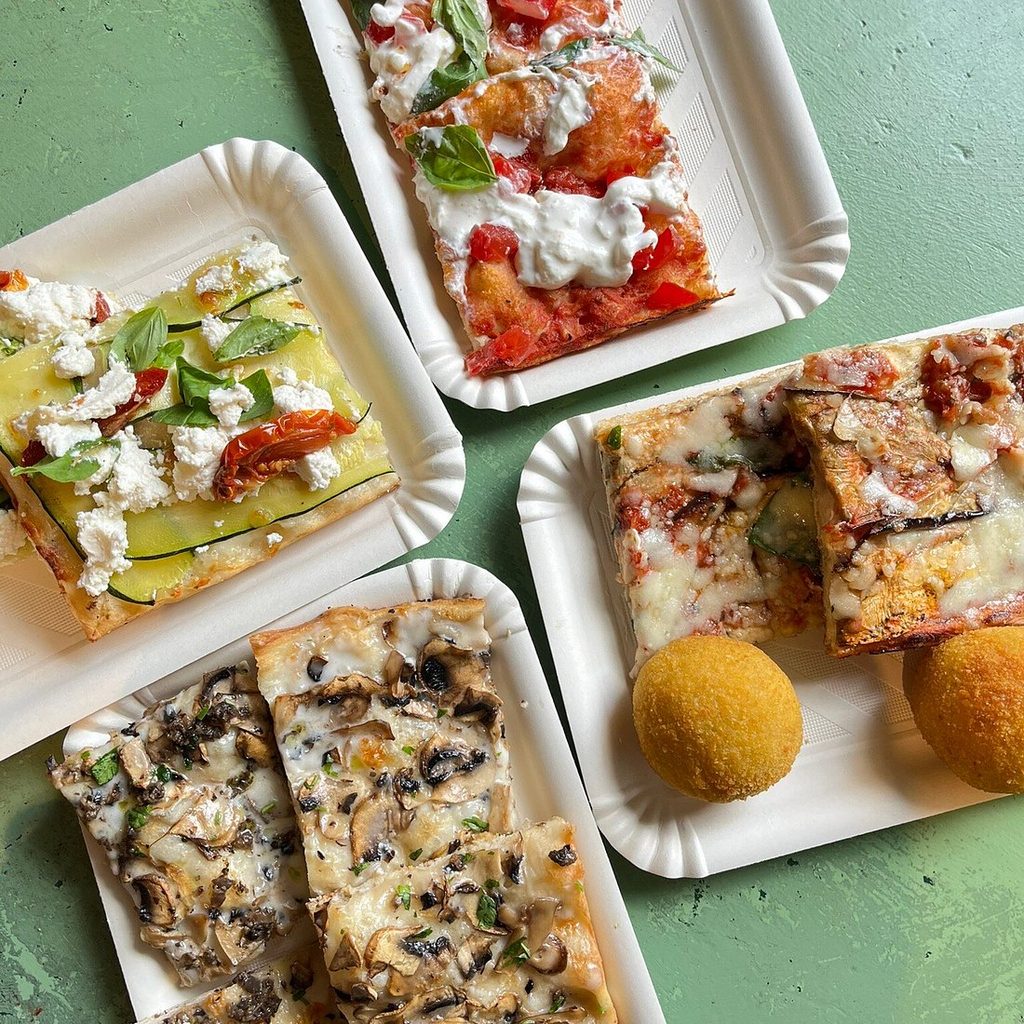
In the evening the same pizza changes format: from around 18:30 or 19:00 the wood-fired pizzerias come out with the whole tonda, 8 to 12 euros. So the rule is this: by day you eat al taglio, in the evening you eat the tonda.
Trastevere: the best Roman table in the city
Trastevere is the neighbourhood where people eat the way Rome has always eaten, and at the same time the one with the fullest terraces. It is worth arriving knowing what you are after: any table at 21:00 is a job interview.
Da Teo, on piazza dei Ponziani, is the best value between price and neighbourhood cooking: main courses run 9 to 16 euros, with carbonara and the wild asparagus fettuccine in season. It opens Monday to Saturday, 13:00 to 15:00 and 19:30 to 23:30, and you book by phone.
The famous one is Da Enzo al 29 on via dei Vascellari 29: twenty tables, no dinner bookings, and a rigatoni cacio e pepe for 14 euros that explains the queue. The strategy is to arrive before 18:15 or to accept it and come at lunchtime. The queue is part of the place, it is not a warning that the food is bad.
On piazza di Santa Cecilia, Roma Sparita serves cacio e pepe with tagliolini inside a basket of baked parmesan for 16 euros, and you eat it with your hands. It opens Tuesday to Saturday, 12:30 to 14:30 and 19:30 to 23:00, and it is closed on Sundays and Mondays. The extra on the house side is the gnocchi with clams, pillows of pasta that soak up all the sauce.
And if you are not in the mood to queue in the neighbourhood, there are two Michelin stars two streets away: Zia, Antonio Ziantoni’s measured cooking, and Glass Hostaria, Cristina Bowerman’s creative work in a lane behind Santa Maria. Both require a booking, and neither bill resembles the 14 euros at Da Enzo. Spirito DiVino, in the same area, plays a different game: very old Roman recipes from a Sicilian family, with the Slow Food mark.
Prati, Monti and Testaccio: the city’s most serious cooking
Prati is the administrative neighbourhood, the one with the big terraces, and it has the advantage that hardly anyone visits. Tonnarello on via della Paglia is the cleanest option: cacio e pepe for 11 euros and carbonara for 12.50, every day from 11:30 to 23:30, and until midnight on Friday and Saturday. The lasagne is 14 euros and worth it if you arrive hungry.
A few streets further up, Monti has two faces. La Carbonara on via Panisperna is the neighbourhood version of a house that has been open since 1906, walls and all, where the carbonara is the only thing you need to order. Trattoria Monti plays on a different pitch: cooking from the Marche region, family run since the seventies, with a card that barely changes and that is better than anywhere else in the area.
Testaccio is, according to most of the guides, Rome’s number one food neighbourhood, and the one that looks least like a postcard. The reason is the Testaccio market, open Monday to Saturday from 7:00 to 15:30. Inside the market you eat like the neighbourhood does, without the tourist markup.
On the edge of the market, Felice a Testaccio is the serious stop: a 15 euro cacio e pepe finished at the table, in front of you, with the pasta put together by hand. It opens every day 12:30 to 15:00 and 19:00 to 23:30, and the booking goes in two weeks ahead. Trattoria Perilli, open since 1911, plays the same game: same neighbourhood, same classic Roman cooking, the atmosphere of a house that has been feeding locals for a century.
If you want the most traditional Roman cooking at a neighbourhood budget, the quinto quarto is in the market: trippa and coda alla vaccinara. And at the other end of the city, at via del Casaletto 45, Da Cesare al Casaletto serves pasta from 14 euros, with fried gnocchi to start. It opens Thursday to Tuesday and closes on Wednesdays.
Other things to know before eating in Rome
- The coperto is not a scam. It is 1 to 3 euros per person and it shows up as pane e coperto or servizio. Add it to the bill before you decide.
- Outside the tourist strip the food improves and the price drops. Move two streets away from Piazza Navona, the Colosseum or Piazza di Spagna and the menu gets longer and the bill cheaper.
- Fountain water is free and drinkable. Rome has more than 2,500 of them, the nasoni. Filling a bottle on the street is normal and free.
- An espresso at the counter costs less. Around 1.20 euros standing; sitting at a table costs more. Cappuccino is a morning drink, not an after-dinner one.
- Suppli are the neighbourhood snack. Balls of fried rice, coda alla vaccinara, carbonara or cacio e pepe, for a few euros each. It is the most Roman food in Rome.
- Season decides the menu. Roman artichokes run from late February to early May, and carciofi alla giudia in the Jewish Ghetto falls in the same window. Out of season, do not order them.
- Aperitivo saves dinner. A spritz costs 6 to 10 euros and the snacks come included. At 19:00, on an empty stomach, it is dinner.
- Book, but only what needs booking. Booking by phone or through TheFork is normal at the good trattorias. Da Enzo al 29 takes no dinner reservations: for that one, patience is the only booking system.
The three desserts the city is known for
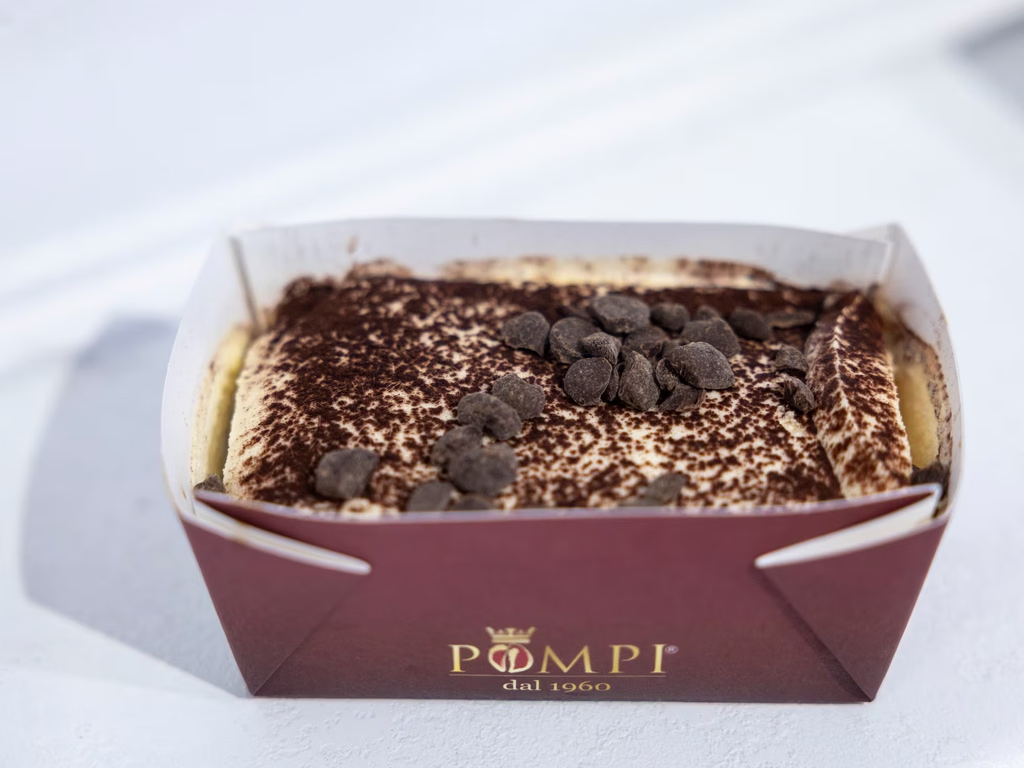
The pistachio tiramisu at Pompi is the one half the world has eaten and the one with the longest queue. Then the classic tiramisu, in any pasticceria on the way home, and a properly made panna cotta. If you want the homemade version, the best tiramisu is still the one at the trattoria where you just ate: at Da Enzo they add a little Nutella on top and it works.
Finding your table with Trively
With the area, the price and the opening hours of each place already decided, all that is left is matching the food to whatever else you are doing that day. Our what to see in Rome guide has the picture of each area and the real hours of each one, so that lunch lands close to you and dinner does not mean crossing the city with a full stomach.
And for the bill, Trively splits the cost across the group on the spot, with a photo of the receipt. That way the food part stops being an awkward conversation.