
Lisbon Travel Guide: What to See, Prices and Booking (2026)
Lisbon travel guide with the details to check before leaving: 2026 transport prices, which museums close on Mondays, tickets for Sao Jorge, the Jeronimos, Sintra and the Lisboa Card.
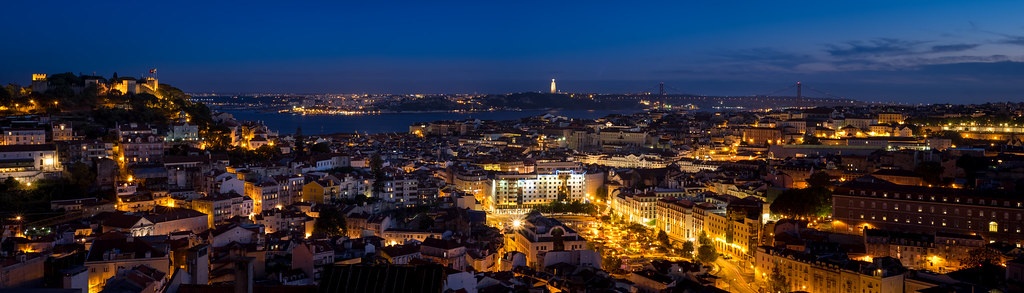
Lisbon makes sense from above. There are seven hills, a river and limestone that changes colour hour by hour, and the quickest way to understand the city is to climb to a viewpoint before sitting down to eat. This guide sorts out the essentials for a first visit: how to get from the airport, which transport title to use, what actually costs money and what you can skip without missing anything that matters. The stops are grouped by hill and by day, not by fame.
Currency, tipping and the four words that open a door
The currency is the euro and almost everything is paid by card. It is worth carrying some cash for market stalls, the vendors at the viewpoints and the smaller fado houses, where there is sometimes no terminal. Tipping is not expected: in an ordinary tasca you round the bill up or leave a couple of euros if the service was good.
Portuguese sounds close to Spanish, so four words cover almost everything: “obrigado” or “obrigada” for thank you, “bom dia” for good morning, “boa tarde” for good afternoon and “a conta, por favor” when asking for the bill. In a fado house you thank the musicians with an “obrigado” when the music ends.
What a day costs: order of magnitude
The transport and monument figures are official 2026 prices, checked one by one. Food and coffee are market ranges rather than published rates: treat them as a sense of scale, not a closed budget.
| Item | 2026 price | Note |
|---|---|---|
| Carris/Metro single ticket | EUR 1.90 | Drops to EUR 1.72 with zapping |
| 24-hour Carris/Metro ticket | EUR 7.25 | Unlimited travel for 24 hours |
| 24-hour Carris/Metro/CP ticket | EUR 11.40 | Adds the Tagus ferry and the Sintra train |
| Castelo de Sao Jorge | EUR 17.00 | Free for children under 12 |
| Mosteiro dos Jeronimos | EUR 18.00 | Tuesday to Sunday only |
| Torre de Belem | EUR 15.00 | Same network, same ticket type |
| Oceanario de Lisboa | From EUR 25.00 | Price depends on the time slot |
| Set menu with drink | EUR 12-16 | Indicative range in central tascas |
| Coffee | EUR 0.70-1.50 | Indicative range |
Where to stay: Baixa and Chiado as a base
Baixa is the most practical option: a grid of straight streets laid out after the 1755 earthquake, with the metro, the trams and the main restaurants a short walk away. Chiado, right next to Baixa, adds bookshops, historic cafes and the Santa Justa lift, although that lift is closed for works. Alfama is the most beautiful and the most awkward: narrow streets, constant slopes and noise at night. Belem is the quietest but sits away from the centre, so it only works as a base if the accommodation is cheap.
The practical difference is the slopes, not the price. A room high up in Alfama or Graca turns every trip down to the river into a flight of steps; in exchange you eat with a view. If the trip includes a day in Sintra, being near a train station is worth more than any other convenience.
From Humberto Delgado airport to the centre
Humberto Delgado airport (LIS) sits less than ten kilometres from Baixa and is well connected to the city. The option that fits this guide best is the red metro line, because it takes the same transport title as the rest of your trip and needs no separate ticket. The Aerobus links the terminal to Baixa and Cais do Sodre and makes sense with a lot of luggage or a hotel far from a metro stop. A taxi or ride-hail is the third option, the most expensive of the three and the only one that does not depend on timetables.
One point that saves money on the way back: inbound traffic into the city congests on the bridge over the Tagus in the morning, so the metro usually wins on the return too. The exception is bulky luggage or a very early flight, where the taxi is worth it for comfort.
Metro, tram, funicular and ferry
The network combines metro, trams, buses, three historic funiculars (Bica, Gloria and Lavra), lifts and the Tagus ferries. Lifts and funiculars are part of the fare network, so they are paid for with the same title. The best known of them, the Santa Justa lift, is closed for works, so check the current status before counting on it.
Tram 28 is the famous one because it runs along the historic axis: it climbs from Martim Moniz through Alfama and Graca, drops into Baixa and Chiado and finishes towards Bairro Alto. It works its way along narrow, sloping streets, and its historic charm comes with a price: the onboard tram fare, which is noticeably higher than a metro ticket.
The Tagus ferries cross the river from Cais do Sodre towards Cacilhas and back. Beyond the pleasure of the crossing itself, they are the fastest way over the Tagus without climbing to a bridge, and they are included in the 24-hour title that adds Transtejo.
The navegante card: the title you actually use
The network is paid for with the ocasional navegante card, which costs EUR 0.50 and stays valid for a year of top-ups. It is a personal card: each person needs their own, and using it between two people on the same trip is not allowed. You can load it at the vending machines and ticket offices, both in the metro and at CARRIS sales points. A contactless bank card also works at the validation gates, but it is always charged at the single ticket rate.
These are the official CARRIS prices in force since 1 January 2026:
| Transport title | 2026 price | When it pays off |
|---|---|---|
| Carris/Metro single ticket | EUR 1.90 | Occasional journeys |
| Zapping (balance per trip) | EUR 1.72 | More than four journeys |
| 24-hour Carris/Metro | EUR 7.25 | A day of moving around the city |
| 24-hour Carris/Metro/Transtejo | EUR 10.35 | Adds the Tagus ferry |
| 24-hour Carris/Metro/CP | EUR 11.40 | Adds ferry and train to Sintra |
| Onboard fare, bus | EUR 2.30 | No card, single journey |
| Onboard fare, tram | EUR 3.30 | No card, single journey |
| Onboard fare, lifts | EUR 4.30 | Up to two journeys |
| Onboard fare, Santa Justa | EUR 6.20 | Closed for works at present |
Monthly and 30-day passes were not updated in the 2026 revision, so they still do not pay off on a short stay. Zapping is the simplest option: load an amount once and let it deduct journey by journey, without having to choose titles.
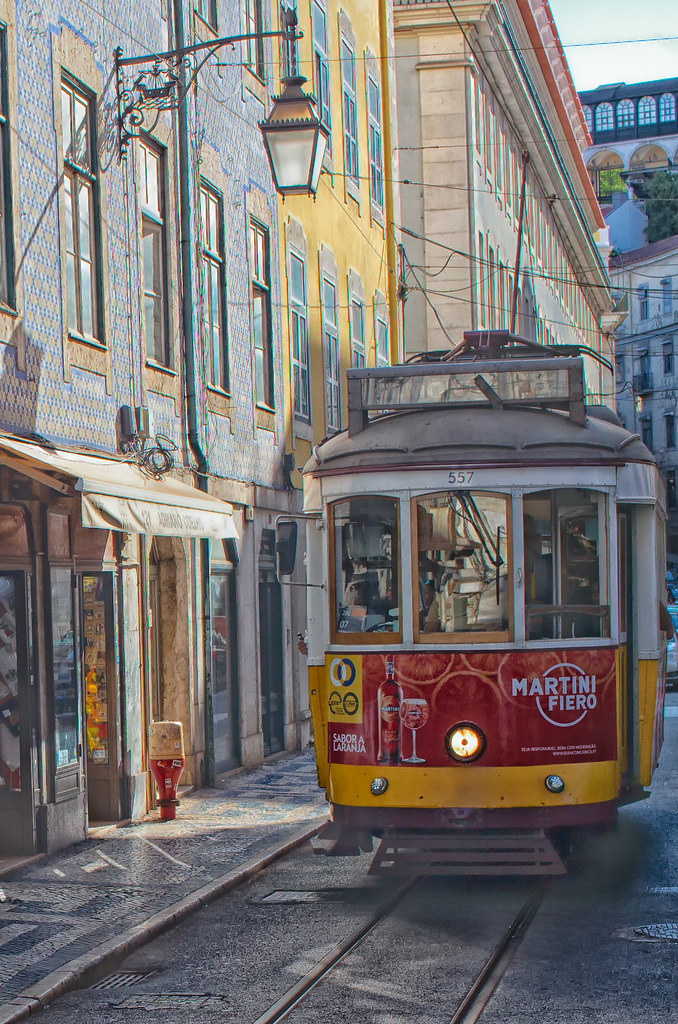
Alfama and Graca: the oldest quarter
Alfama is the oldest part of the city and the quarter that best preserves the medieval layout: narrow lanes, stairways that alternate with small squares, laundry hanging out and tiles that often hide what people would rather not show. The Museu do Fado, the church of Sao Vicente de Fora and the terraces at Portas do Sol structure the walk. Graca, immediately above, repeats the same character with fewer people and one of the best views in the city.
The quarter is better walked without a fixed route than with a closed list. The real difficulty is the gradient: Alfama’s lanes are paved in calçada, slippery with age and treacherous when it rains.
Castelo de Sao Jorge: the view that earns the ticket
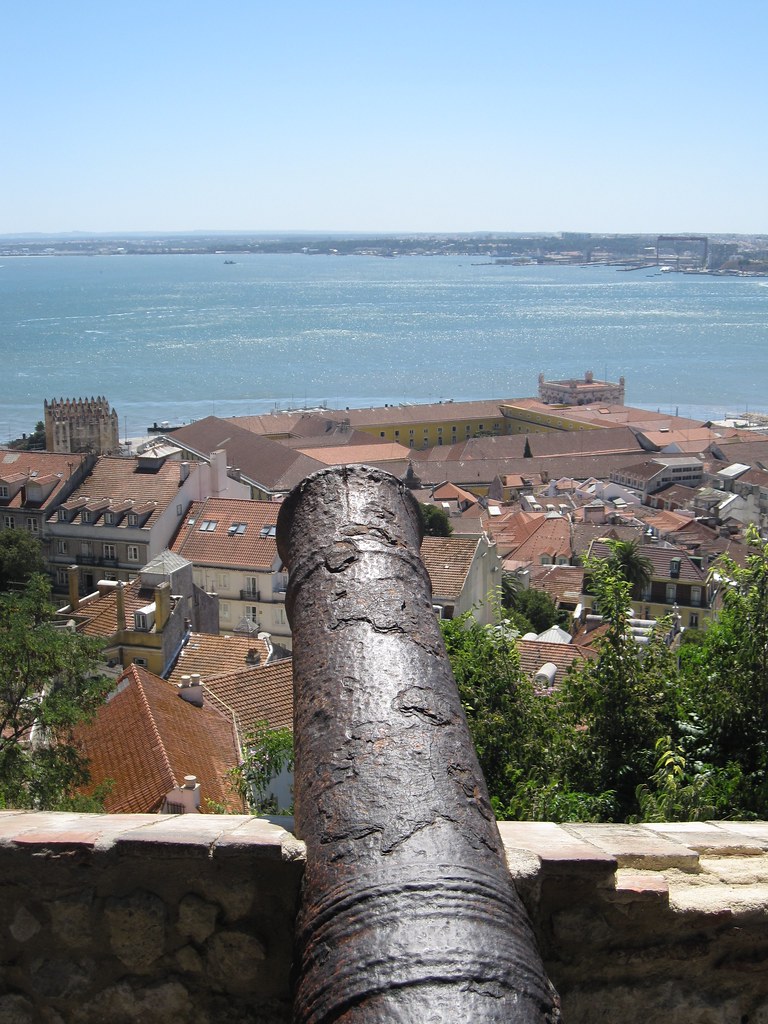
At the top of the hill stands Castelo de Sao Jorge, the original fortress of Lisbon. The ticket covers the whole monumented site: ramparts, gardens, archaeological remains and the highest point of the complex, plus the Camera Obscura, the system of mirrors and lenses that rebuilds the city in real time with a 360-degree view.
| Ticket | 2026 price | Condition |
|---|---|---|
| Adult | EUR 17.00 | Standard rate |
| Young, 13 to 25 | EUR 8.50 | Photo ID required |
| Senior, over 65 | EUR 14.00 | Photo ID required |
| Visitor with specific needs | EUR 12.00 | One companion free |
| Children under 12 | Free | Companion free too |
The price includes the guided tour “A Descoberta do Castelo”, which lasts about an hour, and the Camera Obscura during guided visits of roughly 20 minutes. It opens 09:00 to 21:00 from March to October and 09:00 to 18:00 from November to February, with last admission 30 minutes before closing. It closes on 1 January, 1 May and 24, 25 and 31 December. The castle opens on Mondays, unlike most national monuments, which makes it the sensible choice when the trip lands on a Monday of closed museums.
If what you are after is the view rather than the ramparts, there are free alternatives on the same hill. The Miradouro da Senhora do Monte, a little higher up in Graca, is the best known and the one that fills up most at sunset.
Tram 28: how to board without turning it into a queue
Tram 28 is almost always full on the upper stretch and is hard to board at peak times. Three details make it manageable: go early in the day, at Martim Moniz or at the Graca end, which is where the hardest climb begins; have your navegante card already loaded so you are not looking for a machine in the queue; and consider tram 12, which covers part of the same area with far less tourist pressure.
The viewpoints can be ordered by height, which avoids climbing and descending the same hill twice:
| Viewpoint | Area | Best moment |
|---|---|---|
| Santa Luzia | Alfama | Early, next to the tile wall |
| Portas do Sol | Alfama | Late morning, with the river in view |
| Senhora do Monte | Graca | Sunset, the best known |
| Sao Pedro de Alcantara | Bairro Alto | Sunset, next to the garden |
| Graca | Graca | Mid afternoon, by the convent |
The natural order is Santa Luzia in the morning, Portas do Sol around midday and one of the two high viewpoints at sunset. The practical rule is to save the best viewpoint for the end of the day, when the light drops onto the river.
Belem: the Discoveries route in a morning
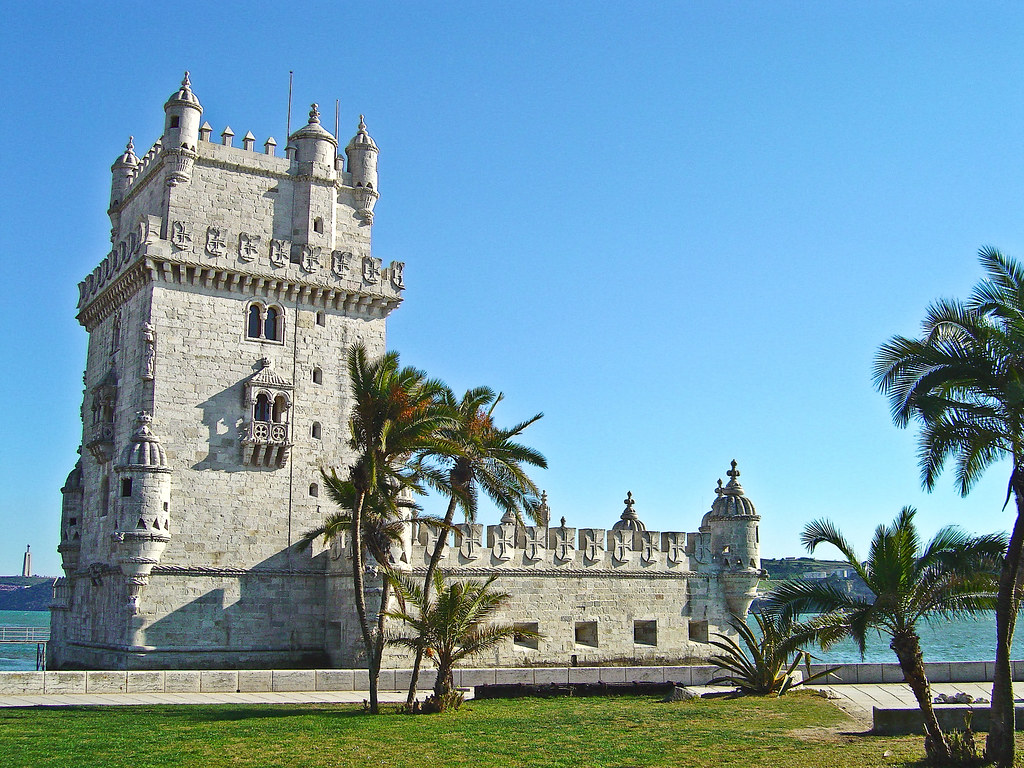
Belem sits on the north bank of the Tagus, west of the centre, and concentrates the two most important monuments of medieval Lisbon. The usual way is to do both in one go, in this order: first the Mosteiro dos Jeronimos, then the Torre de Belem, a few minutes apart on foot.
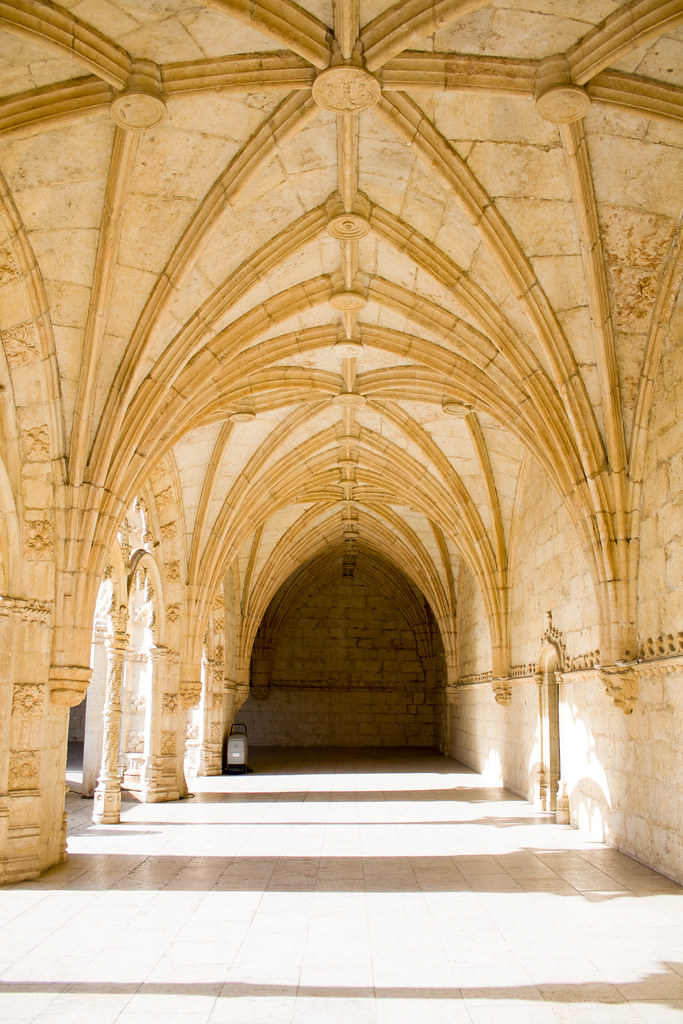
The monastery is Manueline in style, with a limestone facade worked to an unusual degree of detail, and the two-storey cloister is the part that earns the ticket. Next door is the church of Santa Maria de Belem, where the tombs of Vasco da Gama and Camoes are, which forms part of the complex and is visited with the same ticket.
| Monument | 2026 price | Hours and note |
|---|---|---|
| Mosteiro dos Jeronimos | EUR 18.00 | Tuesday to Sunday, 09:30-17:30 |
| 50% discount | EUR 9.00 | Ages 13-24, over 65 and families |
| Children under 12 | Free | Across the Portuguese network |
| Torre de Belem | EUR 15.00 | Same network, same ticket type |
| Igreja de Santa Maria de Belém | Free | Separate entry from the monastery |
| Padrão dos Descobrimentos | Free exterior | Optional paid viewpoint |
The Jeronimos closes on Mondays, which is the main reason not to schedule Belem on that day. The 50% discount applies to visitors aged 13 to 24, over 65, and to families with at least one adult and one child.
The custard tarts: the stop that never fails
Antiga Confeitaria de Belem, in the same district, is the bakery that made the pastel de nata popular as it is known today: thin pastry, egg custard and a layer of cinnamon and sugar on top. There is almost always a queue, it can be ordered to take away, and it can be eaten on the spot in the garden next door if you arrive hungry.
One detail for the budget: there are more bakeries in Belem besides the historic one, so the queue can be avoided by paying a little more or a little less depending on where you eat. The tart can be ordered hot, warm or cold, and some people eat it standing in the garden next door.
Praca do Comercio, Rua Augusta and Chiado
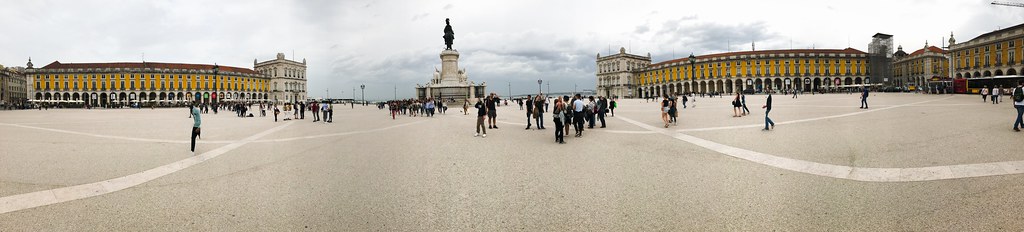
Praca do Comercio is the river door of the city: an enormous square open to the Tagus, closed off by the Arco da Rua Augusta and with the statue of Jose I in the middle looking out over the water. It is the most comfortable place to start an afternoon, because everything is five minutes away on foot.
Going up Rua Augusta leads to the Rossio and, in parallel, to Chiado, the district of bookshops, historic cafes and the Santa Justa lift, which is currently closed for works. Above it spreads the Bairro Alto, calm by day and very lively at night, with the Sao Pedro de Alcantara viewpoint as the best way out at sunset.
The combination that works best is to walk down to the river along Rua Augusta to see the square from below and, the next day, get the rooftops back from the high viewpoints.
Sintra in one day: Pena, Mouros and Regaleira
Sintra is within reach of a train from the station at Rossio, and it is the excursion everyone does from Lisbon, for good reason. The problem is not getting there but the queue: the palaces fill up in mid-morning and there is a limit on visitors per time slot. Buying online from Parques de Sintra requires a date reservation and allows a free change of day for a year, so it is worth booking before leaving home.
One order that works: Pena first thing, Castelo dos Mouros at midday and, if there is energy left, Quinta da Regaleira in the late afternoon. The first two are on the same hill; Regaleira is down in the village, on the road towards Cabo da Roca.
| Sintra monument | Adult 2026 | Young / senior | Hours |
|---|---|---|---|
| Palacio da Pena, essential visit | EUR 20.00 | EUR 18.00 | Palace 09:30-18:30 |
| Palacio da Pena, full visit | EUR 45.00 | EUR 20.00 / 35.00 | Includes the park |
| Pena park | EUR 12.00 | EUR 10.00 | Park 09:00-19:00 |
| Castelo dos Mouros | EUR 12.00 | EUR 10.00 | 09:30-18:00 |
| Quinta da Regaleira | Price only on the official ticket office: regaleira.byblueticket.pt | Free for children up to 5 years old | |
| Palacio Nacional de Sintra | EUR 13.00 | EUR 10.00 | Essential visit 09:30-18:30 |
Children under 6 do not pay at Pena or at Castelo dos Mouros, and Quinta da Regaleira is free for under-5s. The ticket office at Castelo dos Mouros closes between 12:00 and 13:00, with vending machines still available, so it is worth picking a morning or an afternoon slot and not cutting it fine around lunchtime.
Which museums are open and which are closed for works
This is the point that surprises anyone who arrives with a visit list prepared before the works: most national museums and monuments close on Mondays, and several of the big ones are still shut for restoration in 2026. Planning the week around Monday avoids losing almost everything.
- Closed on Mondays: Mosteiro dos Jeronimos, the National Pantheon, the National Museum of Ancient Art and the rest of the Museums and Monuments of Portugal network.
- Still closed for restoration: the National Tile Museum, the National Museum of Ancient Art, the National Museum of Costume, the National Museum of Theatre and Dance, the National Archaeology Museum and the Santa Justa lift.
- Open as usual, and the alternative: Castelo de Sao Jorge, the Lisbon Oceanarium, the National Museum of Ethnology, the National Pantheon outside Monday, MAC/CCB in Chiado, and the smaller neighbourhood sights.
- In Sintra, the Convento dos Capuchos is temporarily closed since 24 September 2026, so it does not count as an option in the itinerary.
The practical conclusion: for the national museums, the good days are Tuesday to Sunday, and Monday is for the castle, the Oceanarium or the high districts, which work normally.
The Lisboa Card: when it pays off
The Lisboa Card is the official tourist pass. It is a physical, personal card available in 24, 48 and 72-hour versions. The list price at the Turismo de Lisboa official shop is EUR 62.00 for 72 hours, VAT included and valid until 31 March 2027, and the 24 and 48-hour versions are cheaper. There is a reduced rate for ages 4 to 15 and free entry for under-4s. It covers more than 50 museums and monuments, unlimited metro, bus and tram travel, the lifts, the Tagus boats and the trains to Sintra and Cascais.
The arithmetic is simple: it only pays off if two or three paid monuments are visited, because the Jeronimos and the Torre de Belem add up to EUR 33 on their own. For a trip with one or two visits, the navegante® card with zapping works out cheaper.
Three warnings before buying it. First: the Jeronimos and the Torre de Belem require booking a time slot with the card, and it cannot be done in advance; it can only be done at the time, with the physical card already activated, and it depends on the daily capacity of each monument. Second: at the Sintra palaces the difference is paid at the ticket office, because the card does not cover the full price. Third: since most museums close on Mondays, a 24-hour card has the same problem as the rest of the city.
Fado: the dinner that runs late
Fado is the other Lisbon: music, voice and a shared table in a small room. It is sung in fado houses spread across Alfama, Bairro Alto and Chiado, and the ritual is always similar: you go in, order a simple dinner, listen to the musicians and applaud at the end.
The fado house charges a fixed price per person, which includes dinner, a drink and the show, and which usually appears as consumição mínima or a “set dinner with show”. It is a closed price rather than a free choice from a menu, and the figure varies a lot between houses, so it is worth confirming it when booking. It is usually the most expensive item of the night.
Fado starts once the plates are finished, so the long dinner is part of the experience rather than a delay. Two practical points: book ahead in high season, and check that the house has live musicians, because some venues only have recorded music. If price is the priority, the Museu do Fado and the record shops of Chiado deliver the same music for a fraction of the cost.
Two, three and four day itineraries
| Day | Itinerary | Main stop |
|---|---|---|
| 1 | Baixa, Praca do Comercio, Rua Augusta, Chiado and sunset at Sao Pedro de Alcantara | First contact with the city |
| 2 | Alfama, tram 28, Castelo de Sao Jorge and Graca | The castle and the high viewpoints |
| 3 | Belem in the morning, Oceanarium or the Belem district in the afternoon | Jeronimos and Torre de Belem |
| 4 | Sintra: Pena, Castelo dos Mouros or Quinta da Regaleira | The excursion out of the city |
| Evening | Dinner and fado in Alfama or Chiado | The last stop of the week |
The sequence works because it splits the city by hills rather than by fame. Belem and the centre go on one day, the high districts on another, and Sintra is left for the day when there is no need to come back into the city. With only two days, the second one should be the castle and Alfama, which is where the most time gets lost.
Frequently asked questions
How many days are needed to see Lisbon?
Two days for the essentials, three to include Belem at a relaxed pace and four if Sintra is added. With less than two days it is best to stay in the historic centre and go up to the castle, because the extra days always fall outside it.
Is the Lisboa Card worth it?
Only if two or three paid monuments are on the plan and the transport is used heavily. With two visits, the navegante® card with zapping is cheaper and simpler.
Which day is everything important closed?
Monday, for almost every national museum and monument, the Jeronimos included. Castelo de Sao Jorge and the Oceanarium do open on Mondays, so that is the day to climb the hill.
Is tram 28 worth the queue?
The ride itself is worth it, the queue is not. Board early, at Martim Moniz or at the Graca end, and have the navegante card already loaded, and the journey becomes comfortable. Tram 12 covers part of the same area and is far less crowded.
What do people eat in Lisbon?
The cooking is seafood, salt cod and sweets. The three classics are bacalhau à brás, bitoque and grilled sardines, and for dessert the pastel de nata and a ginjinha. Dinner starts late, around 20:30, so lunch is better kept light if the evening is a fado one.
The short version
If the trip is two days, base yourself in Baixa or Chiado, pay for transport with the navegante® card and zapping, and give the second day to Alfama, the castle and a high viewpoint at sunset. The third day, if there is one, is for Belem, and the fourth for Sintra.
What matters before leaving is that the city is measured in slopes and in museums closed on Mondays, not in kilometres. With that clear, the rest is solved on foot and with late dinners. Boa viagem!