
Copenhagen Travel Guide: 10 Must-Sees and Things to Do
A Copenhagen travel guide with everything I wish I'd known before going: currency, language, Tivoli, Nyhavn, the Little Mermaid and how to get around a city that doesn't use the euro.
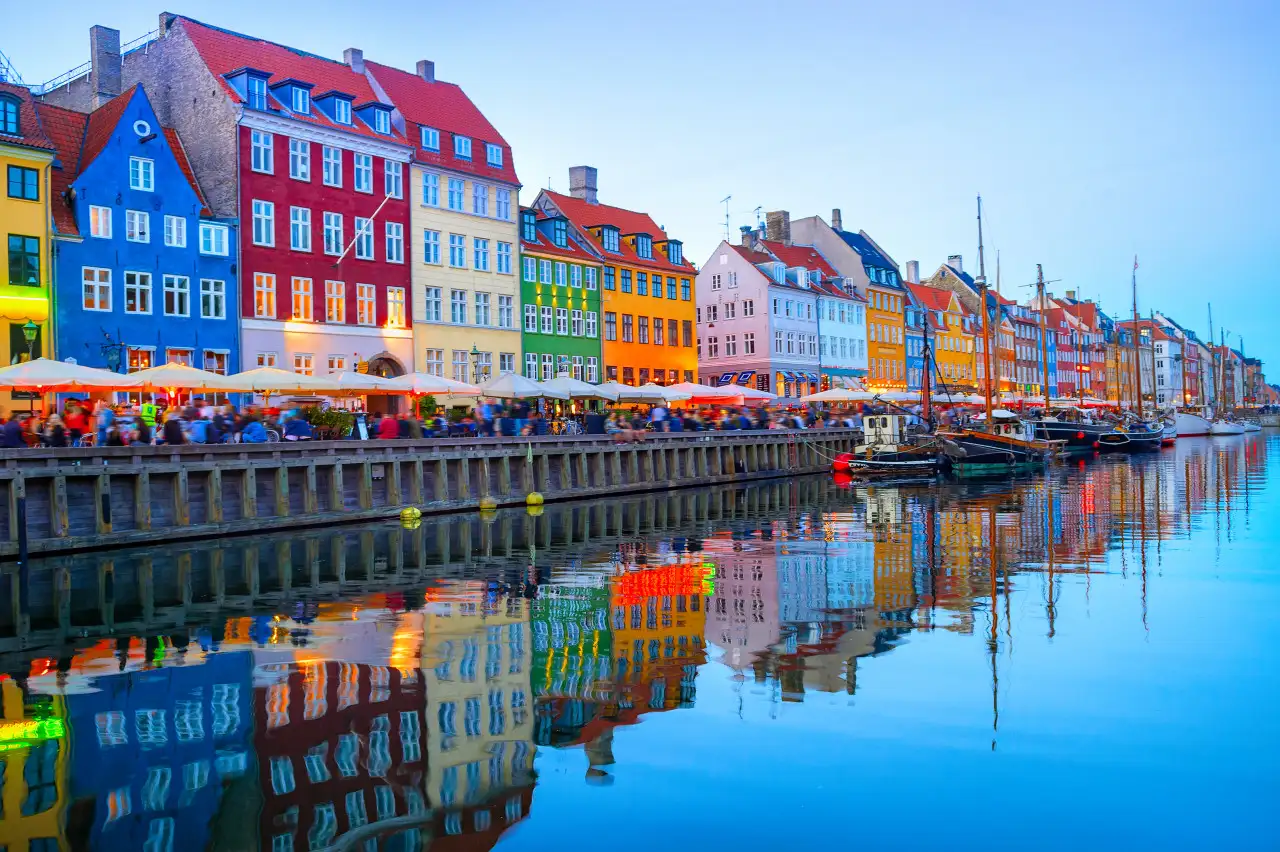
Planning a trip to Copenhagen and not sure where to start organising it? A little wary of arriving in a European country that doesn’t use the euro? Then read on: here’s everything I wish I’d known before visiting the Danish capital, point by point. Based on the days I spent between Nyhavn, Tivoli and the less touristy neighbourhoods, here’s a Copenhagen travel guide designed to help you save time, not overpay, and come home already planning your next visit. Let’s get started!
1. The Danish krone: Denmark doesn’t use the euro (and almost no one touches cash)
The first thing to get straight before flying to Copenhagen is that Denmark, despite being in the European Union, doesn’t have the euro as its currency: here you pay in Danish kroner (DKK). It’s one more mental conversion in the first few days, but you soon get used to it.
And that’s about where the similarity with other no-euro countries ends, because in Copenhagen cash is conspicuous by its absence. Your phone and card rule: contactless payments are accepted almost everywhere, from the flower stall at the market to the metro ticket. In fact, paying with cash can be more awkward than using your card, because some places openly say they don’t take coins.
A couple of numbers to get your bearings: as a rough reference, 100 Danish kroner is around 13-14 euros, and prices for accommodation, food and attractions run relatively high compared with the rest of Europe. So budget accordingly, but don’t panic: you can travel on less than it seems if you choose well where to eat and what to visit.
- Take a no-fee card set up on your phone (Apple Pay or Google Pay work everywhere).
- A handful of kroner just in case, but no more: most places won’t even be able to give you change for a large note.
- Tell your bank before you travel, in case the anti-fraud system blocks your payments abroad right when you need them most.
2. The language: you don’t need to know Danish
Danish has a rather peculiar pronunciation — the Danes themselves are the first to admit it — but it won’t be a problem for you. Almost everyone in Copenhagen speaks English fluently, and in restaurants, hotels, shops and transport you’ll be served without having to ask anyone to repeat themselves.
As a courtesy, learn a couple of words: hej (hello) and tak (thank you). Beyond that, menus, websites and museum signs are usually in English too, so you don’t need to learn anything else to organise the trip calmly.
3. Getting around: on foot, by bike or on the driverless metro
Copenhagen’s great advantage is that it’s a compact city. Practically all the central essentials —Strøget, Nyhavn, Amalienborg, the Christiansborg tower, the Round Tower and Rosenborg— are a 20-30 minute walk from one another. If you like walking, you’ll use transport very little and see far more of the city on the way.
For longer distances, the metro is fast, punctual and driverless, and buses cover the rest well. And careful, because in Copenhagen the bicycle rules: the city is designed for two wheels, with separate cycle lanes almost everywhere. If you hire one, remember the norms are about absolute respect for the local cyclist: they have priority at countless junctions and nobody takes that lightly.
My practical advice: walk in the centre, and take the metro or a bike for the Little Mermaid, Kastellet and neighbourhoods like Nørrebro or Vesterbro, which sit a little further from the tourist heart.
4. Nyhavn: get the photo, but eat somewhere else
Nyhavn is the postcard canal: 17th-century colourful houses, historic boats moored along it and terraces that start filling up the moment the sun comes out. It’s probably Copenhagen’s most famous image… and also one of the most tourist-priced corners of the city.
The plan that works: go early in the morning, when there are few people, take the photo, wander along the pier and then cross over to Christianshavn or the centre to eat. Nyhavn’s restaurants tend to charge more for the same quality you’ll find two streets away, and nobody needs a 30-euro smørrebrød to enjoy the canal.
If you travel in December, Nyhavn becomes one of the loveliest Christmas backdrops in the city: market stalls along the water and hot gløgg. There, the temptation is real, but for spiced wine at local prices it’s better to head for squares like Højbro Plads, where the same drink costs quite a bit less.
5. Tivoli: Europe’s most magical amusement park
Tivoli is the second-oldest amusement park in the world —the first, Bakken, is also in Denmark— and since 1843 it has been running right in the centre of Copenhagen. It’s said to have inspired Walt Disney when he designed Disneyland, and once you step inside you understand why: it’s not an amusement park in the usual sense, it’s a garden of lights, music, stalls and an atmosphere like nothing else.
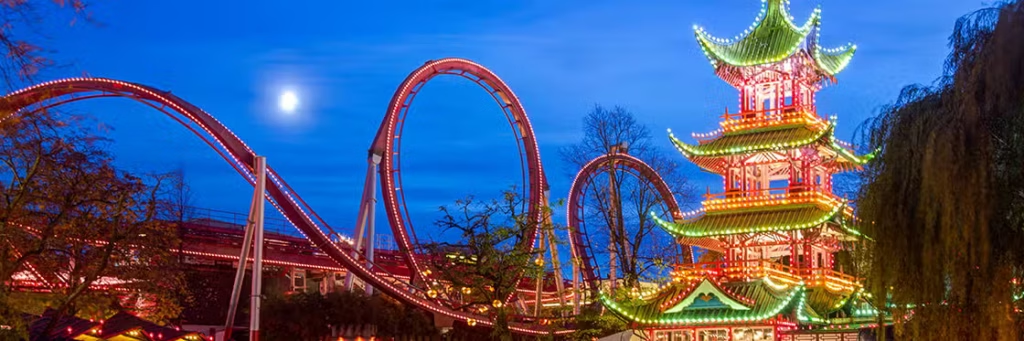
What I’d have loved to know before going:
- Tivoli isn’t open all year round: it runs in seasons (summer, Halloween and Christmas), with dates that change every year. Always check the calendar before locking in your travel dates.
- The entry to the gardens is one thing and the rides another: there are separate passes for the rides. You can perfectly well go in just to stroll among the lights and stalls without getting on anything.
- Buying online is cheaper and skips the queue at the gate. On high-demand days (December weekends and high season) capacity is limited and can sell out online.
- At Christmas the park opens roughly from mid- or late November until the end of December, closed on the 24th and 25th. For the lights, go at night (from 17:00 onwards) and on weekdays: that’s when it becomes the famous million lights.
- If you’re visiting several attractions and museums, check whether the Copenhagen Card includes anything at Tivoli: the coverage changes year to year and isn’t always included.
6. The Little Mermaid and Kastellet: the walk along the water
The Little Mermaid (Den Lille Havfrue) is smaller than you expect: a 1913 bronze sculpture sitting on a rock at the water’s edge. It’s the city’s icon and, let’s be honest, the visit is worth it above all for the walk that leads to it, not for the statue itself.
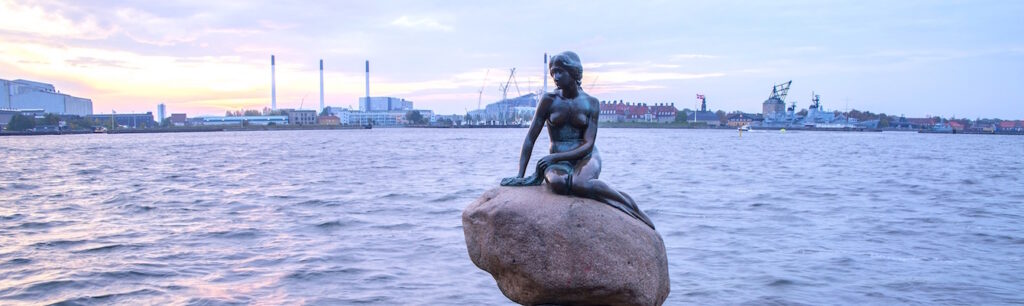
What’s truly worth it is everything around it: the walk along the harbour and Kastellet fortress, a 17th-century star-shaped citadel with ramparts, moats and green spaces where locals run and stroll at their own pace. It’s one of Copenhagen’s favourite walking spots, and in winter the Baltic air gives it a special charm.
Plan to arrive early: it’s one of the most visited spots in the city and crowd-free photos are only possible first thing in the morning.
7. Amalienborg and the Marble Church: the changing of the guard at noon
Amalienborg is the winter residence of the Danish royal family: four almost identical palaces around an octagonal square. At noon sharp the changing of the guard takes place, a simple but very recognisable ceremony that draws quite a crowd, so arrive a few minutes early.
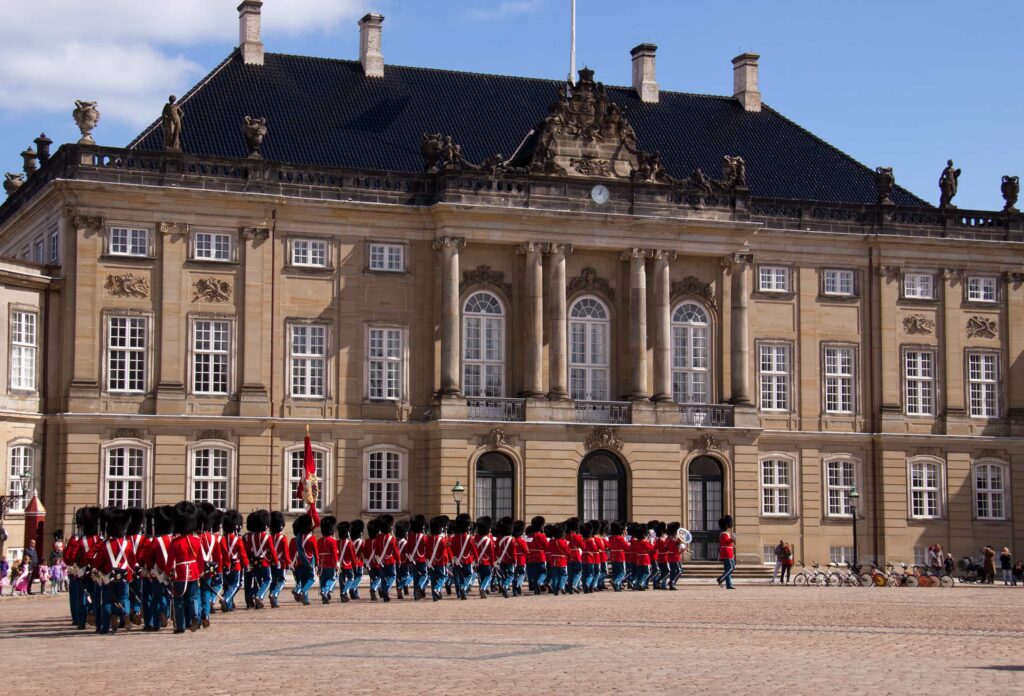
Two minutes’ walk away is the Marble Church (Marmorkirken), with its enormous dome. Climbing to the top gives you one of the best panoramic views of central Copenhagen for a modest entry price. Between the noon ceremony, the church and a stroll through Amalienborg’s gardens, a good chunk of the morning slips away without you noticing.
8. Christiania: a city within the city (with rules)
Christiania is an autonomous neighbourhood founded in the early 1970s on an old military barracks, and strolling through it is an experience unlike any other corner of Europe: workshops, restaurants, colourful houses and a way of understanding community life a world away from the rest of the city. It even has its own Christmas market in the historic Den Grå Hal.
It’s a place built to be respected: you walk and you look, and you follow the neighbourhood’s rules, like not running, not taking photos where you’re asked not to (especially on Pusher Street) and not interrupting the residents’ businesses. A couple of hours walking between Christianshavn and Christiania is more than enough, and the contrast between the 17th-century canal and the neighbourhood’s free spirit is one of the most curious sights of the trip.
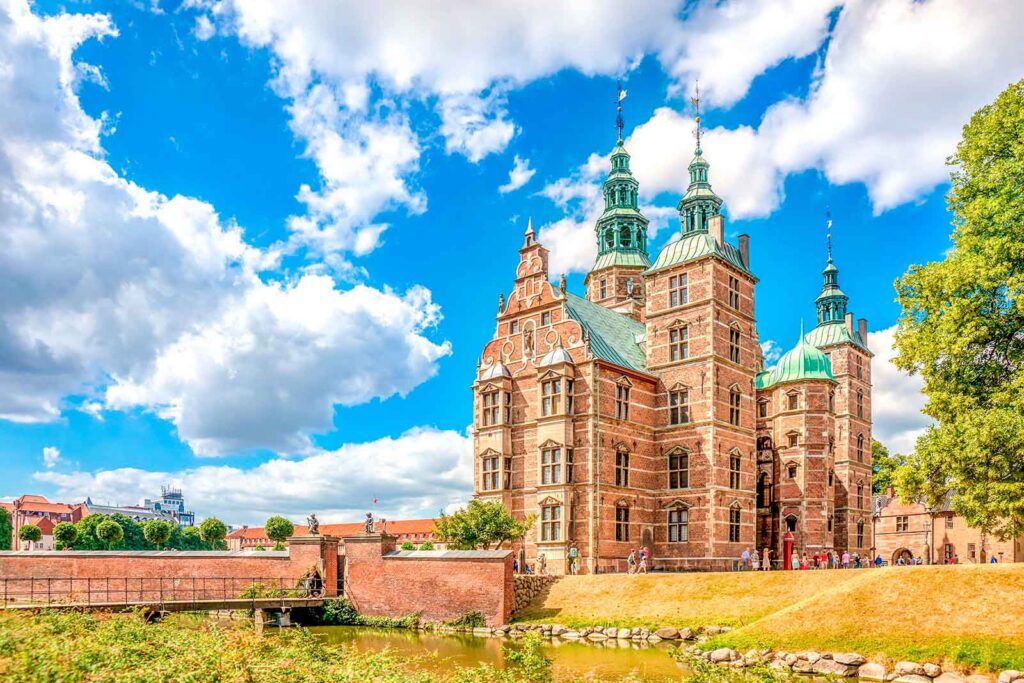
9. Rosenborg: the crown jewels in the very centre
Rosenborg Castle is the quintessence of Danish opulence: built in the early 17th century as a summer residence, today it holds one of the most complete royal collections in Europe. Its most famous treasure is the Danish crown jewels, including the crowns and jewels still worn on the monarchy’s grand occasions.
It stands right in the centre, surrounded by the King’s Gardens (Kongens Have), one of the oldest and best-loved parks in the city. In winter the gardens empty out and the walk gains in calm; in summer they’re pure local life. One detail: in winter, Rosenborg and the Round Tower close earlier than the rest of the historic centre, so it’s worth planning the visit for mid-afternoon.
10. The Christiansborg tower: the three powers and free views
Christiansborg Palace, on Slotsholmen island, is one of those buildings that packs a country’s entire history into a single block: it houses the Danish Parliament, the Prime Minister’s office and the Supreme Court, one of the few buildings in the world where the three powers share the same roof. And it isn’t the first palace on the site: the two previous ones burned down, which leaves behind fascinating archaeological layers.

The interior is explored on guided tours in English that pass through the royal reception rooms and the medieval ruins of the earlier palaces. But for the everyday traveller, the best is up top: the Christiansborg tower offers free access, with a lift, and from its views you understand at a glance why Copenhagen is a city made for walking.
Where to eat: why you always win with the smørrebrød
Eating in Copenhagen isn’t cheap, but there are dishes worth budgeting for and others that get you out of a fix without ruining the trip:
- Smørrebrød: the open rye-bread sandwich with herring, salmon or meat. It’s the country’s star dish: you can try the budget takeaway version or go premium in the classic old-school restaurants.
- Pølser: the Danish street hot dog. Quick, cheap and surprisingly good when the cold bites.
- Kanelsnurrer: the cinnamon roll. The good bakeries bake it fresh every morning and it’s an essential treat.
- Gløgg and æbleskiver in winter: the spiced mulled wine and icing-sugar doughnut balls are the perfect combo among the December market stalls.
A tip I always repeat: walk past the places on the busiest squares and go into the ones you see full of Danes at mealtimes. The quality-for-price difference is huge.
Day trips: Kronborg, Roskilde and a train to Sweden
If you have a spare day, Copenhagen is an excellent base for leaving the city and discovering the surroundings:
- Kronborg (Helsingør): Shakespeare’s Hamlet castle, about 45 minutes by train from the central station. It’s Denmark’s most spectacular Renaissance castle.
- Roskilde: the cathedral, a UNESCO World Heritage Site, and the Viking Ship Museum, with the reconstructed remains of 11th-century longships.
- Malmö (Sweden): a 40-minute train across the Øresund Bridge puts you in the neighbouring country with no great effort, as long as your ID documents are in order to cross the Scandinavian border.
All three are doable in a day, but it’s best to pick one: combining Kronborg and Malmö means more time on the train than at the destination, and Roskilde deserves a full afternoon so you’re not rushing.
How many days you need (and whether the Copenhagen Card is worth it)
With two packed days you see the essentials; with three you travel at ease (two in the city and one on a day trip), which is the pattern most guides repeat and the one I’d recommend if you can stretch the trip. The dense centre helps: you don’t lose hours commuting between attractions.
About the Copenhagen Card: for years it has included public transport and entry to dozens of museums and attractions (Rosenborg, Christiansborg, the Roskilde ship museum, the Den Blå Planet aquarium…). However, the coverage changes every season, so do the maths with the attractions you’ll actually visit before buying it. And careful: don’t assume it includes Tivoli; over the years it has been included sometimes and other times not, so check the current list.
Last tips for coming home with good memories
To round off the guide, four things that make the difference:
- Book Tivoli and the guided tours online in advance in high season or Christmas week: they sell out, and in summer capacity is also limited.
- Dress in layers: you feel the Baltic wind, and in winter temperatures hover around or drop below 0 °C. Summer is mild and bright, but the evenings always cool down.
- In winter the days are short —in January it gets light around 9am and dark around 4pm— so structure your day to leave outdoor sights for daylight hours and indoor ones for the afternoon.
- Put together a single plan with the stops, opening hours, tickets and bookings. In such a walkable city it’s all too easy to end up rebuilding your itinerary from a lost WhatsApp conversation.
That’s precisely what Trively can help with on a trip like this: keeping together the map with your saved places, the opening hours and the tickets, and keeping the plan accessible even when the connection fails in the metro or on the way to the airport. It’s no substitute for official sources or transport bookings: it just stops you hunting down an old PDF while the whole group waits in the Tivoli queue.