
Amsterdam Travel Guide: 10 Must-Sees, Prices and What to Book
What to see in Amsterdam and how to plan it: real train and GVB fares, Rijksmuseum and Van Gogh Museum prices, how the Anne Frank House booking works, and which day trips are worth the train.
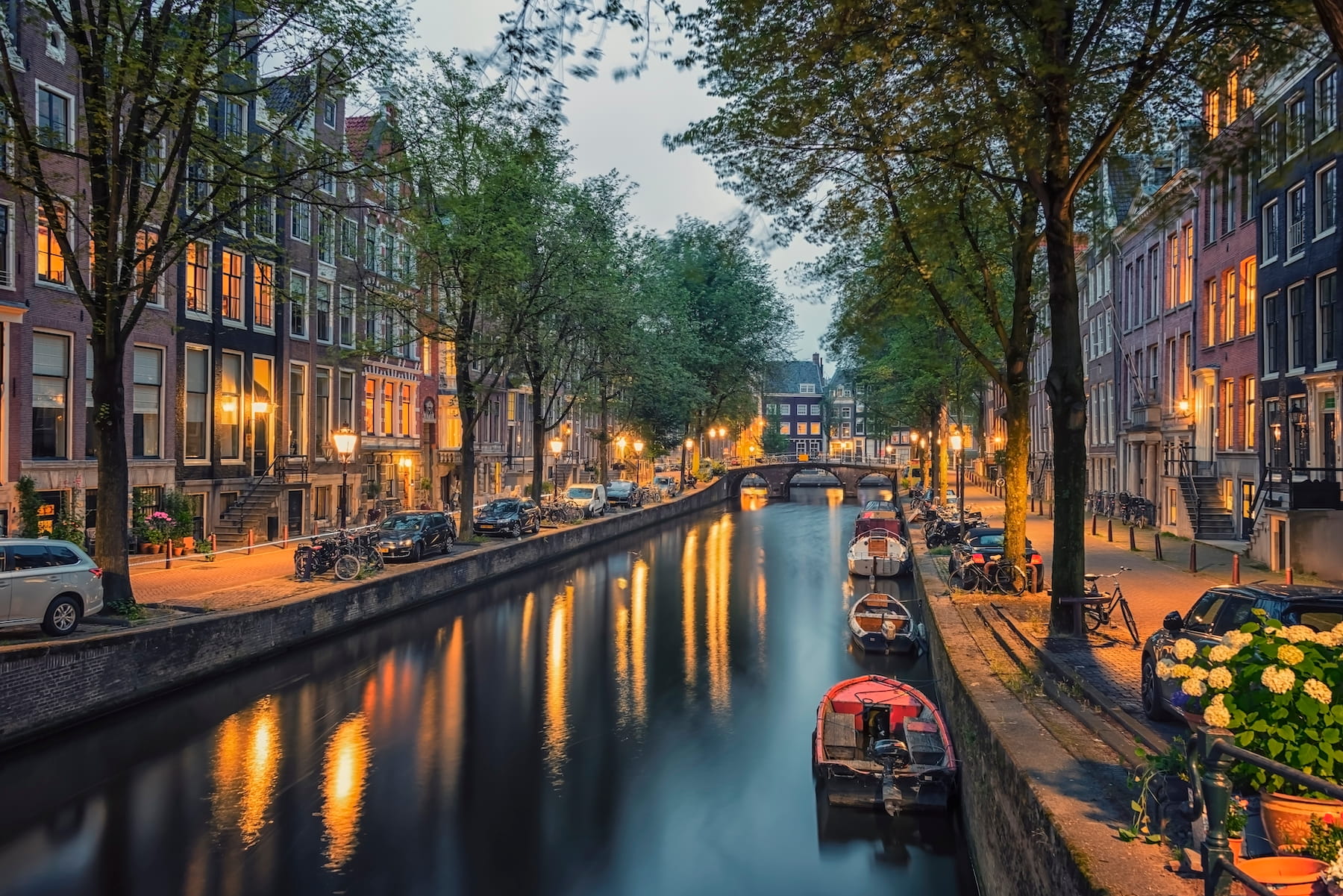
Amsterdam is badly explained by a single photo. Between the canals, the bridges, the bikes and that honeyed light of spring afternoons there is a whole city, and the first useful decision is not what to see but how to get around it: almost everything important is on foot or by tram, but the three big museums require a timed slot and the airport makes far more sense when you arrive by train. This guide collects what is worth checking before you leave, with 2026 figures: which travel pass to buy, what each admission costs, which visit has to be booked ahead, and how to lay out three days without crossing the city five times.
Amsterdam at a glance
- Currency: the euro. Contactless cards work almost everywhere, but carry some cash for machines that will not accept your PIN.
- Language: English is understood across transport, museums and restaurants. Three Dutch words open any conversation.
- Airport to centre: 17 minutes by direct train to Amsterdam Centraal, roughly EUR 6.20 in second class.
- City transport: one system for tram, metro and bus. Tap in and out with a card and the daily cost is capped at EUR 10.50.
- Free things to do: the IJ ferry, the whole of Vondelpark, the canals on foot, the windmills from outside and the Zaanse Schans cheese factory.
- The fact that changes an itinerary: the Anne Frank House sells tickets online only, on Tuesdays at 10:00, for a visit six weeks later.
1. Money: the euro, the card and a little cash
You pay in euros and almost everything is paid by contactless card. It works in supermarkets, at pharmacies and on the small terraces along the canals. Cash is largely surplus to requirements in the centre, and some small venues no longer take it at all.
The one predictable snag: some foreign cards do not work as a PIN in Dutch cash machines, and some terminals ask for a PIN instead of a signature. If your bank gives you a card with a PIN, there is no problem. If it does not, bring cash as a backup. A card with no foreign transaction fee saves you exactly what you will spend on poffertjes.
- Contactless is almost universal, but carry some cash in case a machine rejects your card.
- Skip the exchange offices in the centre, where the rates are brutal. Withdraw at your own bank’s machine or just pay by card.
- Small shops often round down a cash payment or add a small surcharge.
2. Language: English and three Dutch words
There is no need to know any Dutch: nearly everyone speaks impeccable English. On transport, in museums and in restaurants you will be served without any trouble, menus carry an English version and the official mobility apps are in English. Station announcements are heard in both languages.
Even so, three words are enough to get a smile: “dank je wel” (thank you), “alstublieft” (please) and “hallo” (hello). And one frequent question: in Dutch the city is written Amsterdam, with no accent, and it is pronounced with an open first “a”, in two syllables.
3. Airport to centre: 17 minutes by train
The direct NS train runs from Schiphol to Amsterdam Centraal in 17 minutes, with eight departures an hour during the day and one an hour in the small hours. The station sits directly under the terminal, so there is no walk between the plane and the platform.
The full second-class fare is around EUR 6.20 in 2026, after the 6 to 9 per cent rise applied by NS. Booked in advance on their site, the price drops. There is nothing to buy: you validate with a contactless card or your phone at the gates at both Schiphol and Centraal. Paper tickets are in the yellow machines, with a small surcharge, and trains leave from platforms 3.
The alternatives have their own arithmetic. The bus 397 Airport Express connects with the south of the city and the Museumplein in about 30 minutes for EUR 6.75, and takes card payment only. The Amsterdam Travel Ticket costs EUR 20 for one day, EUR 27 for two and EUR 34 for three, and includes the airport train plus all city tram, metro and bus travel. A taxi moves between EUR 40 and 60, in 25 or 40 minutes depending on traffic. And the metro does not reach Schiphol: for that you change at Zuid and connect with line 52.
- Direct train to Centraal: 17 minutes, eight departures an hour, EUR 6.20 in second class.
- Amsterdam Travel Ticket: EUR 20, 27 and 34 for one, two and three days, with the airport train and unlimited city transport.
- Taxi: EUR 40 to 60 and 25 to 40 minutes. The metro is no use for the airport.
4. Getting around: OVpay, GVB Max and the free ferries
All city transport is run by GVB and is paid the same way: tap in and tap out, with a contactless card or your phone, and the fare is calculated by distance travelled. Under the OVpay system there is a daily cap: GVB Max limits what you spend on the city network to EUR 10.50 per day per card, however many journeys you make.
The cap has three conditions: always use the same card, complete the journey with both a check-in and a check-out, and do not travel on night buses, which have their own fare. Forgetting to check out is not free: the system charges the full journey and you can fix it afterwards in the app.
If you prefer a fixed price, GVB tickets are sold in the app, in the machines and at the service points: one hour costs EUR 3.40 and the 24-hour ticket costs EUR 10. Longer passes go to EUR 16 for 48 hours, 21.50 for 72 hours, 27.50 for 96, 34 for 120, 39 for 144 and 43 for a full week. A night bus costs EUR 5.70, and the group day ticket is EUR 27 for up to five people.
Trams generally run from 06:00 to 00:30, after which night buses cover the night until 07:00. In the centre, lines 2, 5 and 24 get you to the Museumplein, 13 and 17 to Westerkerk, and 52 crosses the city from north to south. And there is a free surprise: the IJ ferries are free for pedestrians, bicycles and mopeds, with no card and no booking.
- Check in and out with the same card or phone; forget the check-out and you are charged more.
- GVB Max: a maximum of EUR 10.50 of GVB travel per day per card. Night buses are not included.
- GVB tickets: EUR 3.40 for one hour, EUR 10 for 24 hours, 16 for 48, 21.50 for 72 and up to 43 for seven days.
- The IJ ferries cost nothing: F2 goes to IJplein, F3 to Buiksloterweg, day and night, and F4 to NDSM.
5. The canal ring: a 17th-century plan
The Canal Ring, a UNESCO World Heritage Site since 2010, is Amsterdam on a single line: Herengracht, Keizersgracht and Prinsengracht draw a crescent traced across the water, with four centuries of merchant houses along its edge. Walking it at dusk, when the windows of those houses light up, is one of the best free things to do in the city.
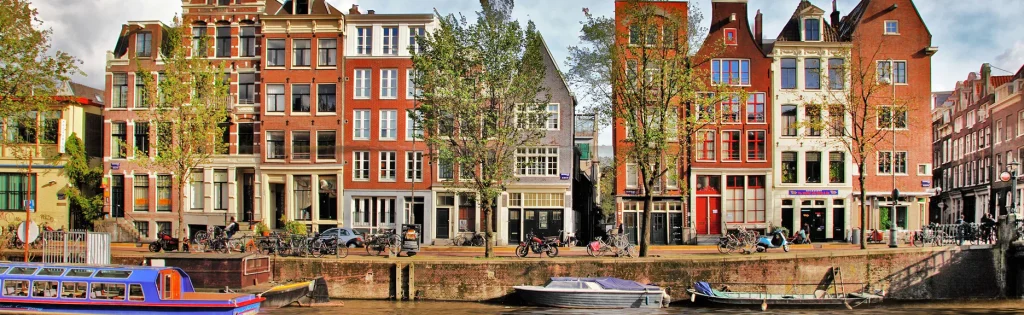
Inside the ring is the neighbourhood that actually feels like Amsterdam: the Jordaan, with its courtyards, its back streets and its stalls; the Nine Streets (De Negen Straatjes), full of design shops and cafes; and the Noordermarkt, which sets up on Saturday mornings. A local tip: climb the Westerkerk tower and stand still for a minute watching the bikes, the boats and the light line up.
- The ring is best walked: it is the only way to look upwards without boarding a boat.
- The Nine Streets hold the design shops, and the Noordermarkt only appears on Saturdays.
- The Westerkerk tower is the best free vantage point in the centre: from the top you can read the canals from above.
6. Museumplein: the Rijksmuseum and the Van Gogh Museum
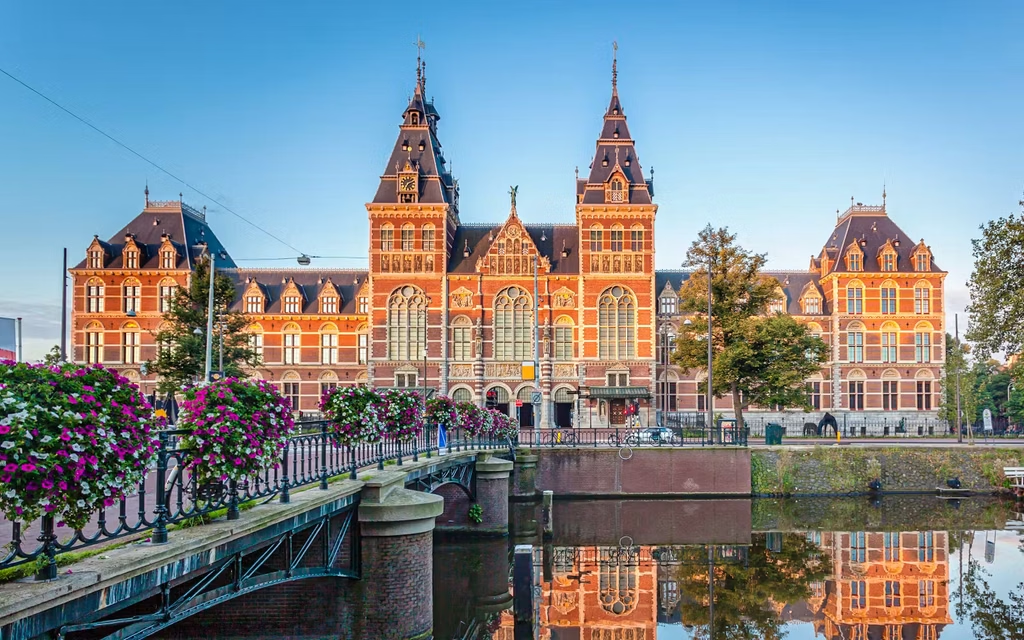
The Rijksmuseum holds Rembrandt’s The Night Watch, the largest collection of Dutch masters and an entire room given over to the Golden Age. It costs EUR 25, it is free for under-18s and also for Museumkaart and I amsterdam City Card holders, with a half-price entry for CJP and EYCA. It opens every day from 09:00 to 17:00, public holidays included, and you cannot get in without a reserved start time: it applies to everyone, Museumkaart holders too. A few loose tickets are left at the entrance, and no cash is taken inside, card only.
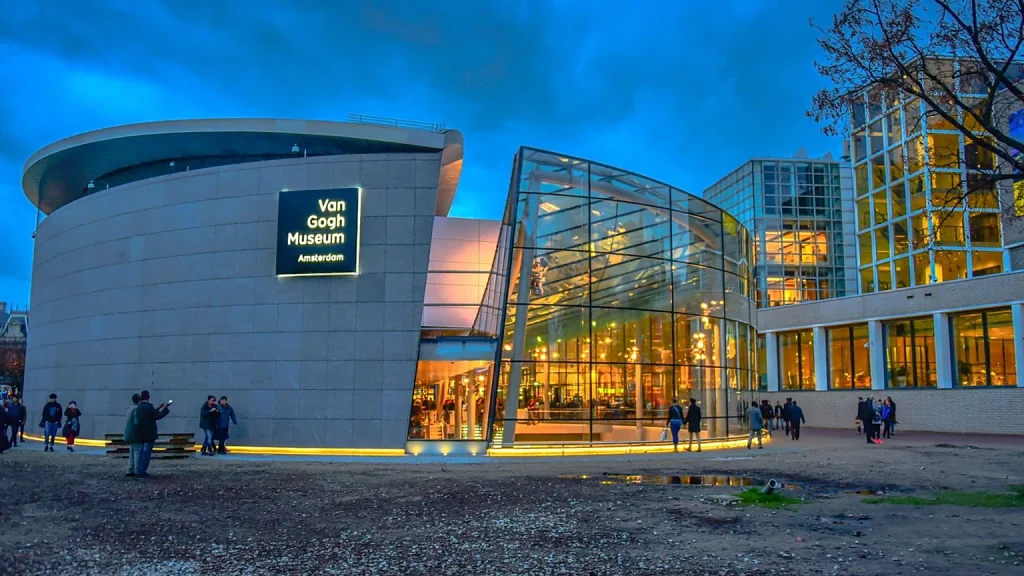
Next door, the Van Gogh Museum has the largest collection of the painter’s work in the world, with the sunflowers, the Arles bedroom and the self-portraits, plus a gallery on how he influenced other artists. It costs EUR 25, it is free for under-18s, and tickets are sold online only, with a start time and no exhibition surcharge. It opens daily from 09:00 to 18:00 and on Fridays until 21:00, although in autumn the late opening pulls in: check the calendar before you pick a day. Since 2022 it is no longer included in the I amsterdam City Card, so that pass only pays off if you skip Van Gogh.
- Rijksmuseum: EUR 25, free for under-18s and with Museumkaart, every day from 09:00 to 17:00.
- Van Gogh Museum: EUR 25, online only and with a time slot. 09:00 to 18:00, and Fridays until 21:00.
- Both need a reserved entry time and take no cash: bring a card or phone and book weeks ahead.
7. Anne Frank House: book, book, book
The Anne Frank House, at Prinsengracht 263-267 with the entrance on Westermarkt 20, is among the most emotionally heavy museums in Europe. Getting in means walking through the hiding place where Anne wrote her diary, and the visit lasts about an hour and includes the audio guide. The price is EUR 16.50 for an adult, including a EUR 1 booking fee, EUR 7 for ages 10 to 17 and EUR 1 up to age 9. Museumkaart and ICOM pay EUR 1, and the I amsterdam City Card gets no discount. There is also a 30-minute English introductory talk for EUR 7.
What matters is how you buy it. There is no ticket counter: tickets go on sale only through the official website, every Tuesday at 10:00, for a visit six weeks later. There is no waiting list, no changes and no refunds, so the date is decided once. The museum opens every day from 09:00 to 22:00, with exceptions: closed on 21 September for Yom Kippur and from 22 to 24 September 2026 for maintenance, and shorter hours on 7 November, 1 January, 25 and 31 December.
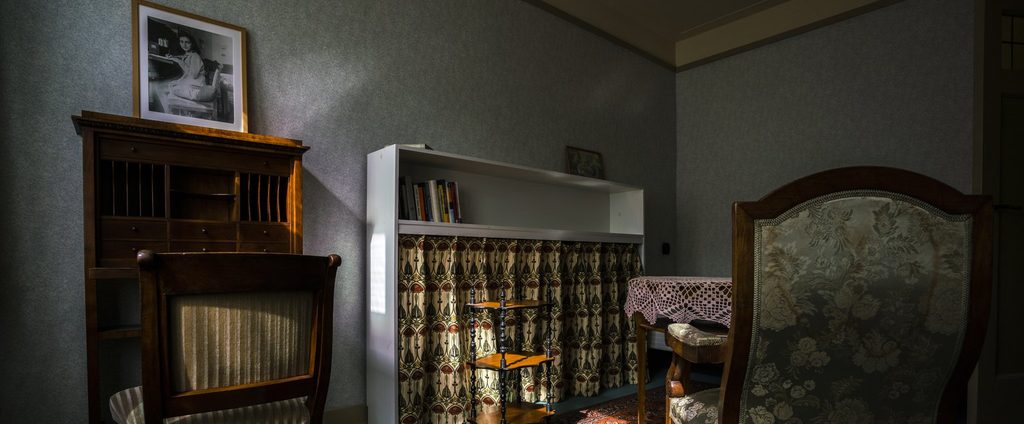
For the wider context, the Nationaal Holocaustmuseum at Plantage Middenlaan 27 completes the story with a permanent exhibition on the persecution of Jews in the Netherlands. It opens Monday to Saturday from 10:00 to 17:00, also with a time slot and booking required. Its ticket is valid for a week at the Jewish Museum, the Portuguese Synagogue and the Hollandsche Schouwburg, the other three key sites of the Jewish quarter.
- Entry: EUR 16.50 for an adult, EUR 7 for ages 10 to 17 and EUR 1 up to 9, always with a reserved time.
- Online only and no waiting list: at 10:00 on Tuesdays, tickets go on sale for the visit six weeks later.
- Open every day from 09:00 to 22:00. Closed on 21 September and from 22 to 24 September 2026.
- The route has steep stairs and a high step: leave a large rucksack at the hotel.
8. Vondelpark: the city’s green drawing room
Vondelpark is the park where Amsterdam lies down in the sun. It is free, almost 2 km long and sits west of the Museumplein, between the museums and the Oud-Zuid neighbourhood. There are families with pushchairs, joggers, people reading and dogs tethered on every lawn, a pond with a wooden bridge, huge picnic lawns and open-air concerts in summer.
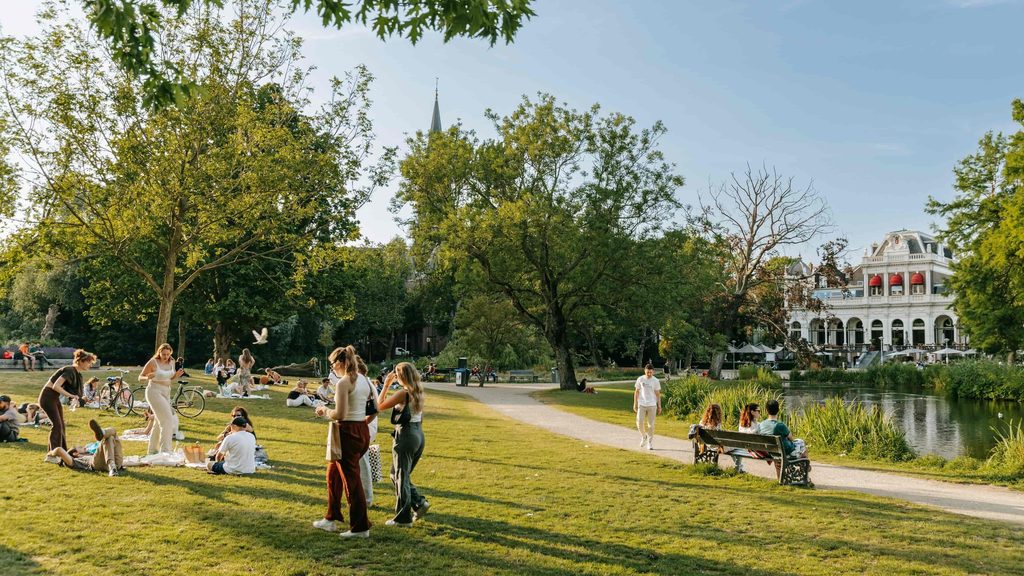
Crossing it end to end takes about twenty minutes at an easy pace and drops you into Oud-Zuid without passing through the centre crowds. It is the ideal mid-afternoon plan, before the Museumplein terraces fill up, and its two pavilions have terraces for an improvised brunch. If the day is overcast, this is the city’s usual refuge: here the rain ruins nothing.
9. Dam Square and the old centre: beyond the Red Light District
Ground zero is Dam Square: the Royal Palace, the Nieuwe Kerk with its tower open to the public, the columns of the National Monument and a constant river of people. From there the streets of the old centre fan out, where the Red Light District, the Singel flower stalls and the tourist shops all share the same pavements. The Waterlooplein market of bracelets and clothing runs Monday to Saturday, and the Bloemenmarkt, the tulip bulb market floating on the canal, only makes sense between April and May.
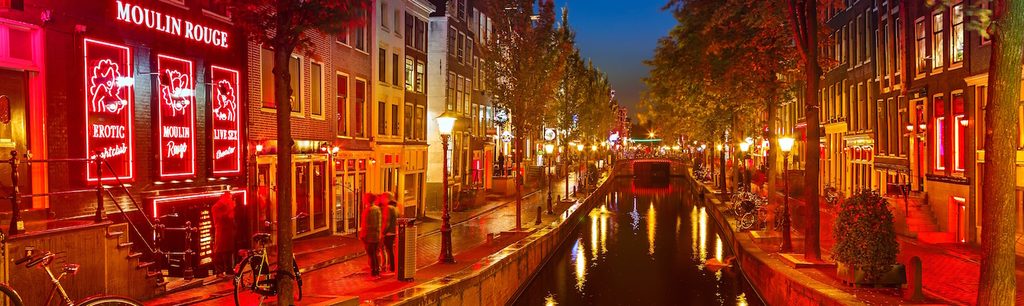
The best way to see the centre is at night, when the crowds thin out: the lit bridges, the canals framed by narrow houses and the silhouette of the Nieuwe Kerk are worth far more than any postcard. The city’s history is told here too: 17th-century Amsterdam was forged on this square, on the spice trade and the municipality’s control of the water.
10. Keukenhof and Zaanse Schans: two day trips
Keukenhof only exists in spring, which is worth remembering because it is advertised all year: the tulip garden opened on 19 March and closed on 10 May 2026, and in 2027 it opens from 18 March to 9 May, with tickets on sale from mid-October 2026. It costs EUR 21.50 for adults and EUR 10 for ages 4 to 17, free under 4, and it runs from 08:00 to 19:00. KeukenhofBuzz buses with entry included leave from Leiden, Haarlem, Hoofddorp and Amsterdam RAI, between EUR 33.50 and 38.50.
Zaanse Schans runs all year and is closer: 17 minutes on the Sprinter from Centraal to Zaandijk-Zaanse Schans. Walking into the village is free, the cheese factory and the clog workshop can be visited without paying, and you only pay to go inside the windmills, at EUR 7.50 for an adult, or into the museums. The Zaanse Schans Card, EUR 29.50, opens the two main windmills, the Zaans Museum and the mill museum.
- Keukenhof is spring only: closed since 10 May 2026 and open again from 18 March to 9 May 2027.
- Zaanse Schans: the village is free, the windmills cost EUR 7.50 and the combined card EUR 29.50.
11. Eating like a local: from herring to stroopwafel
Amsterdam food is not haute cuisine, it is street food with a lot of charm. The short list: haring with onion and pickles, crispy bitterballen, sweet mini pancakes called poffertjes, patat with pindasaus and a stroopwafel made that morning. In winter, fried oliebollen join the list, and Dutch cheese works as a souvenir: it is light, it does not break and it keeps for weeks.

The place to try all of it in an hour is the Albert Cuyp market, in the De Pijp neighbourhood: 260 stalls, Monday to Saturday from 09:30 to 17:00, and ten minutes from Centraal by metro on line 52. It is also the best spot for cheese and for herring, which is eaten by hand with raw onion, as it should be. If the day is sunny, the De Pijp terraces are the afternoon plan, and a stroopwafel still warm from the griddle is the right way to end the visit.
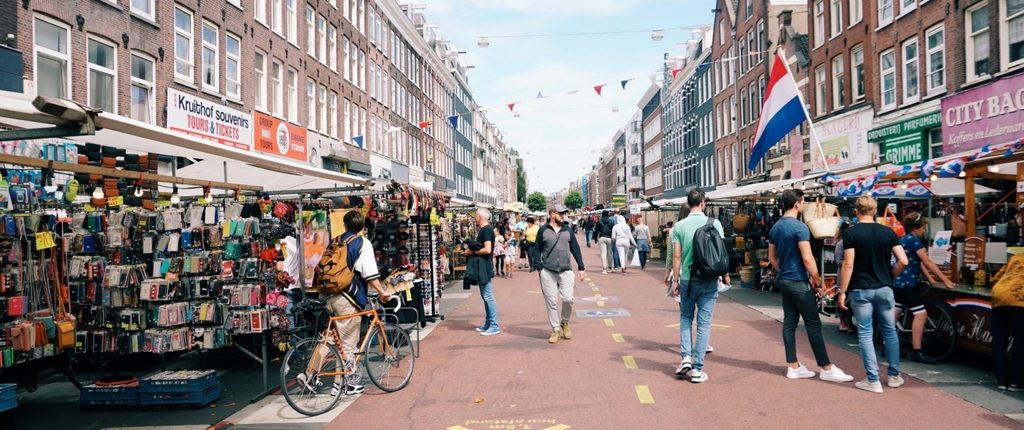
- Albert Cuyp, Monday to Saturday from 09:30 to 17:00, with 260 stalls: herring, stroopwafels and cheese on one route.
- A stroopwafel just off the griddle, still warm, beats anything eaten standing on a platform.
- Dutch cheese is the souvenir people actually take home.
That is the city fitted into place. The train from Schiphol, the EUR 10.50 daily GVB cap, the Anne Frank House booked on Tuesday at 10:00, Vondelpark as a break and the canals on foot at dusk: with that, you see Amsterdam without turning it into a marathon of ticketing. Figures checked on 26 September 2026.