
Krakow Travel Guide: 10 Must-Sees
Everything you need to know before a trip to Krakow: currency, the language, where to eat, the Main Square, Kazimierz, Wawel, Zakopane and Auschwitz.
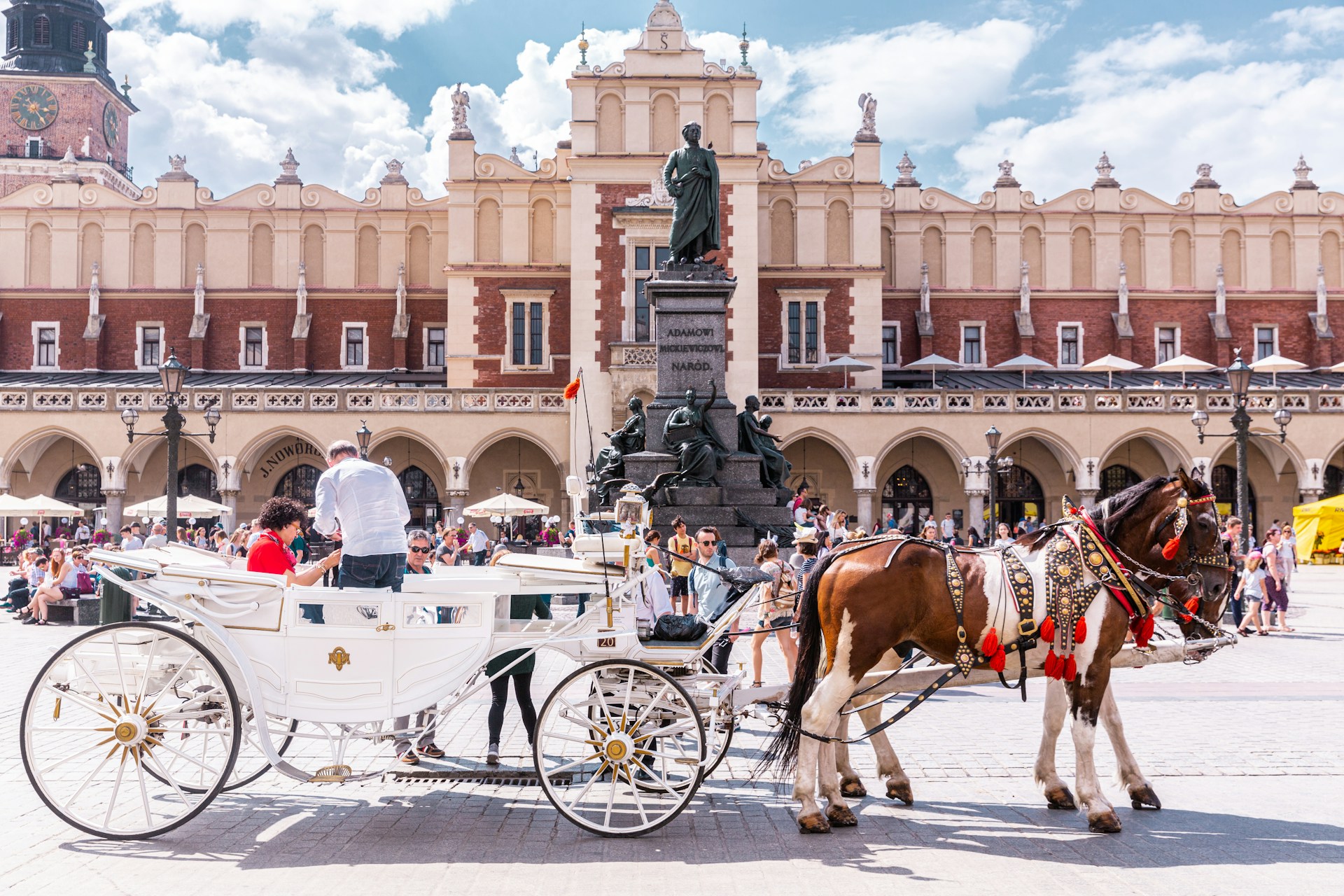
Off to Krakow and not sure where to start planning? A bit nervous about changing currency and arriving without understanding a single word of Polish? If so, keep reading, because here it is, point by point, everything I wish someone had told me before my trip. Based on the four days I spent in the city, this is the Krakow travel guide that, I promise, won’t leave you indifferent. Let’s go!
1. Currency in Krakow: the zloty and how not to overpay
The first thing to know before travelling to Krakow is that Poland, although it belongs to the European Union, doesn’t use the euro: here you pay in zloty (PLN), written as «zł». And the exchange rate isn’t the only thing you’ll have to deal with, because prices appear in zloty… and also in groszy, the cents.
These are my tips so you don’t spend the whole trip doing maths:
- Pay by card whenever you can. It’s the way to get the best rate and, above all, to avoid rip-off fees. Even if they tell you it’s cash only, check whether you can spot a card terminal on the counter; sometimes they’re just reluctant to take cards.
- Don’t change money at the airport or in the tourist centre. The fees there are among the highest. Go for a Kantor instead, the exchange offices that travellers commonly recommend for their low commissions.
- Carry some cash, no matter what. The small milk bars and markets don’t always take cards, and that’s exactly where you’ll eat the best food in the city.
2. The language in Krakow: a barrier or an excuse to laugh?
If there’s one thing that scares you before a trip to Krakow, it’s Polish. It’s one of those languages that, written down, seems to be pointing a finger at you: lots of w’s, lots of cz’s, letters you don’t even know how to pronounce. Good news though: young people speak English without a problem, especially in the centre. The not-so-good news: walk a couple of streets further and that’s over.
So what do you do? Exactly what I did: order by pointing, laugh, and repeat dzień dobry and proszę like a hopeful parrot. What I took away is that nobody laughs at your broken Polish; quite the opposite, people put more effort into making themselves understood than you’d expect. And if all else fails, an offline translator gets you out of any scrape.
3. Where to eat in Krakow: dishes you can’t miss
Food is one of the biggest reasons to travel to Krakow and, spoiler alert, the thing that left me with the most memories. You don’t eat expensively here, and you eat for real. These are the dishes that have to be on your list:
Żurek, the soup that always wins. Żurek is a fermented rye soup, with a slightly sour tang (don’t panic, you barely notice it), served to you inside a bread bowl. What nobody tells you is that the bread is enormous and that beneath the soup lurk egg, sausage and chunks of bacon that turn the dish into something seriously heavy. If you try to finish the soup and then the bread, you’re signing up for a competition you’ll lose: I never managed to finish the bread. At most places you can ask for it served straight on a plate, and trust me, it’s worth it either way.
The zapiekanki at Plac Nowy, for no-frills nights. In the middle of this square there’s a kind of circular kiosk housing several stalls that serve zapiekanki: an open bread loaf, mushrooms, cheese and whatever you fancy on top, all for a ridiculous price. You eat standing up or, if you’re lucky, at one of the few tables in the square, alongside people who don’t share your language either.
Pierogi: impossible to stop at one. Dumplings with hundreds of fillings: potato and cheese, meat, mushroom, cabbage… and the sweet ones with blueberries. At the pierogarnias, the specialists, the hard part is ordering a single batch. Try them at any of the Pierogarnia Krakowiacy spots: some of the best food for very little money in the whole city.
Bigos and oscypek cheese. Bigos is the hunter’s stew, with cabbage, fermented cabbage, meat and many hours over the fire. They say it’s even better the next day, and it’s true. And oscypek, a smoked sheep’s cheese you’ll find on the streets and, above all, on the road to Zakopane, grilled and served with blueberry jam, is the snack you didn’t know you needed.
Where to try all of this without missing a beat? In our where-to-eat-in-Krakow guide by neighbourhood you’ll find the exact spots, with street, price and the tricks.
4. Milk bars in Krakow: eating properly for next to nothing
If you want to eat like a local and at laughable prices, the milk bars (bar mleczny) are your place. They’re canteens left over from another era that the state still subsidises so people can eat cheaply. Inside they’re completely understated: trays, a counter and a menu written in Polish by hand. No tourists, quite the opposite.
And here’s something that happened to me that I loved: the ladies at the counter, who only speak Polish, help you with everything. They see you hesitate, they point at the dish you’re looking for, they show you the portion of bigos in its pot and they reply with gestures and a smile. I paid very little, ate brilliantly and came out knowing that stop has unbeatable value for money. Don’t leave it out of your route.
5. The Main Square, the heart of Krakow
The Main Square (Rynek Główny) is the nerve centre of the Old Town and, no question, one of the most beautiful places to see in Krakow. It’s one of those squares where you kill two hours doing nothing and you’re never bored: flower stalls, artisans selling carved keepsakes, musicians, jugglers and the arches of Cloth Hall, packed with shops. All around it, palaces with facades of a thousand colours.
But the real star is St. Mary’s Basilica, on one of the sides. Its two uneven towers can be seen from every corner, and what stays with you isn’t what you see but what you hear: on the hour, every hour, a trumpeter leans out of the taller tower and plays the hejnał, a melody that cuts off abruptly halfway through. Legend has it an arrow killed the trumpeter at precisely that point. The first time you think it’s a malfunction. Then you hear the story and you get goosebumps.
6. Kazimierz, the Jewish quarter: history you can feel
Ten minutes on foot from the Old Town you reach Kazimierz, the Jewish quarter and one of the unmissable corners of Krakow. Today it’s where the prettiest cafés and the synagogues are, but walking its streets is walking over a history that weighs heavy. One of Europe’s largest Jewish communities once lived here and, after the Holocaust, almost nothing was left. Books tell it in numbers; here, the numbers have street names and house numbers.
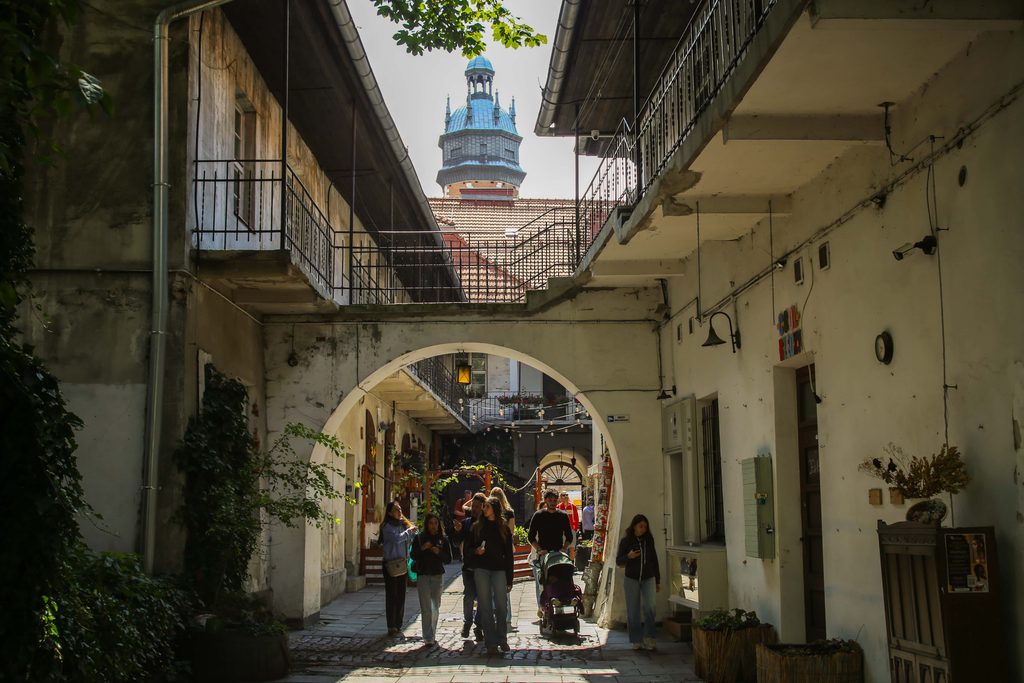
It’s not a place to rush. It’s a district you explore slowly, almost in silence, and it leaves you with more questions than answers. I came out with a lump in my throat trying to picture all the scenes they tell you about in history books or on the tour while you’re standing right there.
7. Wawel Castle and an uncomfortable inhabitant
Up on its hill above the river, Wawel Castle is, without a doubt, one of the most impressive complexes to see in Krakow. Palace and cathedral where Poland’s kings were crowned, with postcard views. But there’s a detail that made me think more than all the crowns combined: during the German occupation, the Nazi governor of occupied Poland, Hans Frank, had his residence here. He lived behind those walls while the whole city was subjugated.
Seeing the castle for the first time while they explain all that to you (and tell you about the photo sessions the governor staged on those very balconies) catches you off guard and leaves you open-mouthed. The excursion we took to dig deeper into this part of history was definitely this one.
8. A day trip to Zakopane and Morskie Oko lake
If you have a spare day on your Krakow trip, the Zakopane excursion is not up for debate. It’s the gateway to the Tatras, a timber town in the middle of fairytale mountains, with oscypek stalls everywhere and landscapes you don’t see every day. I went in summer and it already looked beautiful to me; with snow, I imagine, it’s another dimension.
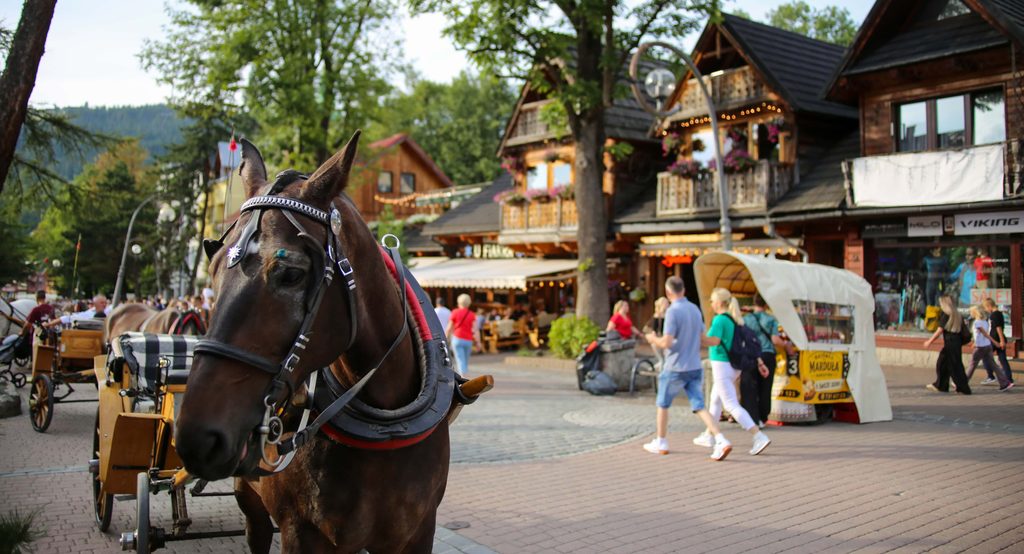
From there, the star hike is Morskie Oko, the “eye of the sea”: a glacial lake hidden among the peaks that you reach on foot from Palenica Białczańska. It’s around nine kilometres of gentle climb through a gorgeous valley, with the option of going up by horse-drawn carriage if you’re short on energy (the ride up costs 100 zloty and the way down 70, bring cash). The lake, green and cold, looks small until you’re standing at its edge. Worth every drop of sweat.
9. Visiting Auschwitz, essential on any Krakow trip
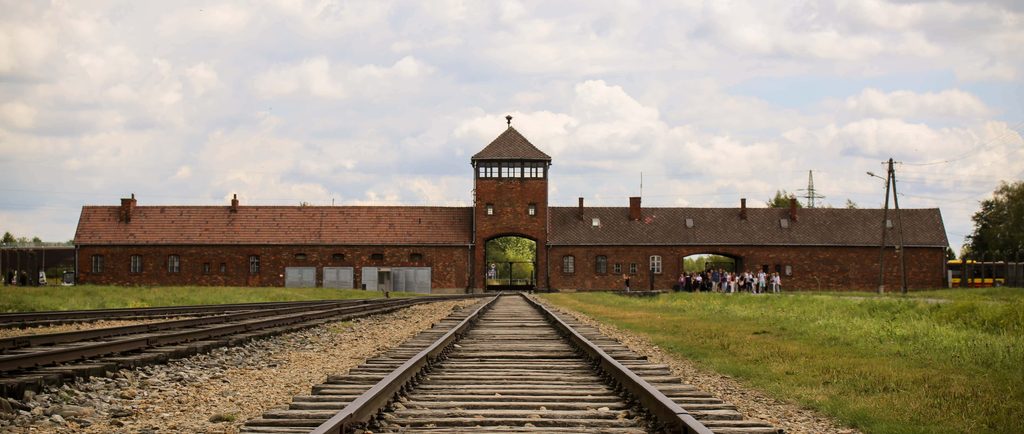
And here we are at the day that changes you. The Auschwitz-Birkenau concentration and extermination camp is just over an hour from Krakow, and I firmly believe it’s a visit you must make, even though it hurts. It’s not a “you can’t miss it” in the tourist-guide sense, because the word tourism sits badly on this place. But it’s one of those visits you simply have to do, and, in our view, this tour combining the camp with the Wieliczka Salt Mine is a total win.
Auschwitz I preserves the blocks and the Arbeit macht frei gate. Then there’s Birkenau, which is simply impossible to take in. And here’s what the high-school history books don’t explain: the sheer scale of the camp, the Canada warehouses where they sorted the belongings of the people who had just arrived, the mountains of shoes and of hair on display there, or the fact that most people who arrived went straight to the gas chamber. There are parts of this story that the photos in the books never showed and that make more sense with your feet on the ground. Important tip: book in advance, because it fills up. And don’t plan anything after the visit: you won’t feel much like talking when you come out.
10. More tips for travelling to Krakow
To wrap up this Krakow travel guide, here’s a list of quick tips to help you organise your trip:
- Give it at least 4 days: two for the city, one for Zakopane and Morskie Oko, and one for Auschwitz and the Salt Mine.
- Book Auschwitz before you travel and, if possible, with a guided tour.
- Pack comfortable shoes: Krakow and its excursions are done on foot.
- Download an offline map (like Maps.me) with the places to see in Krakow marked; finding your way is easy, but it’ll save you headaches.
- Save recommended spots the moment you see them in the same trip map: I, for example, kept adding the Plac Nowy kiosk, the pierogarnia, the milk bars and the train times to Trively, and I didn’t miss a thing. You can do it by hand, sure, but losing it all between the chat and the screenshots isn’t as fun.
Have you been to Krakow? Am I missing a tip you think is essential? Drop it in the comments and together we’ll make this Krakow guide even better. Happy travels!